Bad breath is often a mouth-drying imbalance
It usually shows up at an ordinary moment: you lean in to talk, or you taste last night’s coffee even though you’ve brushed. The easy assumption is “it’s something I ate,” but the pattern often lines up more with how dry your mouth has been—on waking, after a long meeting, or late afternoon when you’ve gone hours without water.
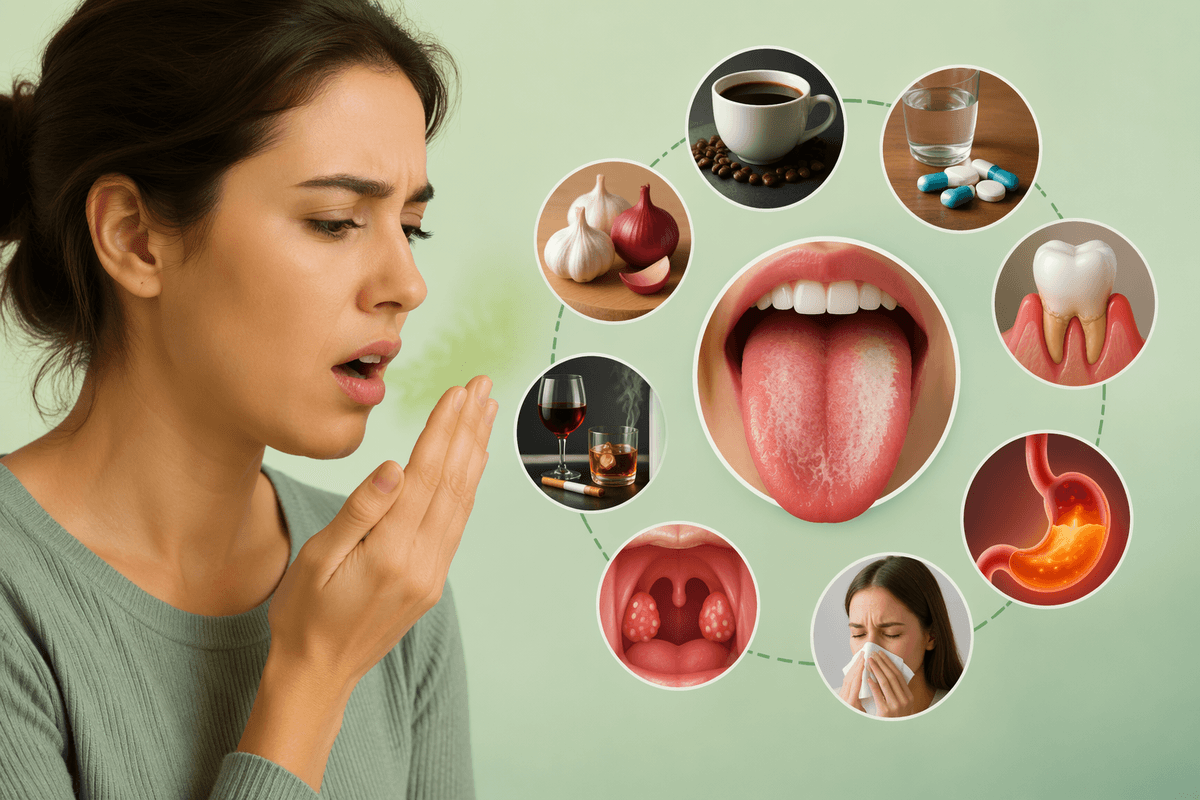
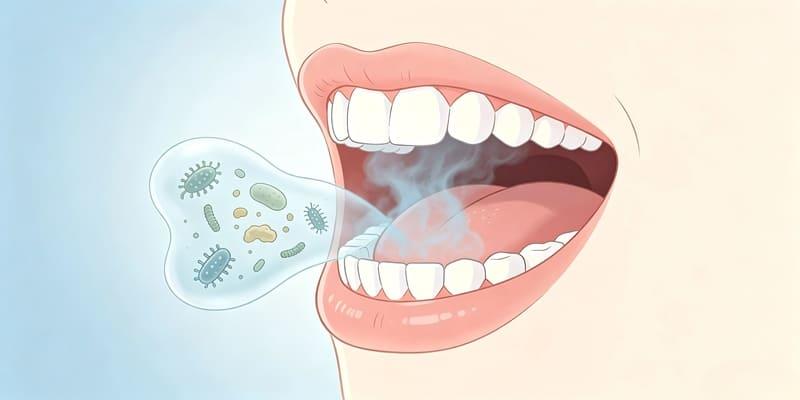
When saliva thins out, your mouth loses some of its natural rinse cycle. Bits of food and shed cells sit longer on the tongue, between teeth, and along the gumline. Bacteria have more time to break down those proteins, and the byproducts can smell sulfur-like. That’s why breath can feel worse after coffee, alcohol, stress, mouth breathing, or certain medications—even if your brushing routine hasn’t changed.
The frustrating part is the inconsistency: one day feels fine, the next feels “stale” by noon. Often it’s less a sudden new problem and more a small shift in dryness that lets odor build faster than you expect.
Tongue coating quietly fuels persistent odor
You might notice it most when you do a quick “check” with your tongue after brushing: your teeth feel clean, but your mouth still has a heavy taste that seems to cling. Sometimes it’s faint until you talk more, drink coffee, or go a few hours without eating—then it shows up again, like something is sitting in the background.
The tongue is a textured surface, and that texture can hold onto a thin film of shed cells, food particles, and bacteria. When saliva is lower, that coating can get thicker and stickier, especially toward the back where a toothbrush rarely reaches. Bacteria tend to break down proteins there and release stronger-smelling compounds, so the odor can persist even when the rest of your mouth feels “fresh.”
It’s easy to misread this as a stomach issue or a single “bad” food, because the smell doesn’t always track with meals. But in some people, the tongue is simply where the day’s dryness and buildup collect first.
Gums and hidden pockets change breath quality
Sometimes the clue isn’t the breath in general—it’s the quick smell you notice on floss, or the tender spot that stings when you bite into something crunchy. Your teeth can look fine, your brushing can be consistent, and yet there’s a faint “swampy” note that keeps returning, especially late in the day.
Along the gumline, plaque is harder to fully clear, and small areas can hold onto food particles and shed cells. If the gums are a little irritated, they may pull away in tiny places that create shallow pockets. Those pockets don’t always hurt, and they’re easy to miss, but they can trap proteins where low-oxygen bacteria do well. As they break that material down, the smell can shift from “dry” to more sour or sulfur-like.
A few crowded teeth, a new retainer, or a week of mouth dryness can make the same routine suddenly feel less effective.
Food choices interact with saliva and bacteria
It can be confusing when the smell shows up hours after you’ve eaten, not right away. You might blame garlic or onions, but then it happens after a “clean” lunch too—especially if you’ve been sipping coffee, talking a lot, or going long stretches between drinks.
Food doesn’t just leave a scent behind; it changes the mouth’s conditions. Proteins (like meat, dairy, some protein bars) can leave more material for bacteria to break down into sulfur-smelling compounds, particularly if saliva is low. Sugary or starchy snacks can be sneakier: they tend to cling in grooves and between teeth, feeding plaque and thickening that tongue film you don’t always feel until later.
Then there are the foods and drinks that quietly dry you out—alcohol, strong coffee, very salty snacks. The odor isn’t only “from the food,” but from how it tilts the balance toward less rinsing and more buildup, so the same mouth can smell different depending on the day.
Dry mouth from habits and medications snowballs
It often feels like a small thing at first: you’re halfway through a phone call and realize you’ve been swallowing more, or your lips feel slightly tacky even though you’ve had coffee. Then later, when you exhale into your hand, the smell seems sharper than it “should” be for a normal day.
Some routines quietly push the mouth toward that dry state—mouth breathing during sleep, talking for long stretches, vaping or smoking, frequent caffeine, or alcohol at night. Medications can add to it too, sometimes without an obvious “dry mouth” sensation at first. When saliva drops, the thin coating on the tongue thickens, plaque gets stickier, and trapped proteins sit longer—so bacteria have more time to make sulfur-smelling byproducts.
That’s where it snowballs: the drier the mouth gets, the faster buildup returns, and the more you chase “freshness” without feeling certain what changed. A week of stress or a new prescription can be enough to shift the whole pattern.
Stomach and reflux are less common than assumed
It’s common to notice a sour taste after a heavy meal and immediately think, “This must be coming from my stomach.” But for many people, the timing doesn’t quite match: the breath seems worst on waking, after coffee, or late afternoon—moments that usually track more with dryness and buildup than with what’s happening lower down.
Reflux can play a role for some, especially if there’s frequent burning, regurgitation, or a nagging throat irritation. Still, most odor compounds are produced in the mouth, where bacteria have direct access to tongue coating, plaque, and trapped proteins. Even when acid does reach higher, it may simply leave the mouth feeling coated or irritated, which can change saliva flow and make that “stale” smell return faster.
A slightly acidic taste can mimic “stomach breath,” when the main driver is still a mouth that isn’t rinsing itself well that day.
Throat, tonsil debris, and sinus drainage effects
You might notice it on a “clear” mouth day: teeth feel clean, tongue feels better than usual, yet there’s a faint rotten-egg edge when you swallow or clear your throat. It can be easiest to spot in the morning or during allergy season, when your nose feels even slightly blocked and you’ve been breathing through your mouth without realizing it.
The back of the throat is another place proteins can linger. Tonsils can have small folds that hold tiny bits of debris; when that material sits in a low-oxygen nook, bacteria can break it down into the same sulfur-smelling compounds that show up with tongue coating. Because it’s tucked away, the smell can feel “mysterious,” like it’s coming from deeper than the mouth.
Sinus drainage can add to the mix too. Mucus is protein-rich, and when it trickles down the throat—especially overnight—it may leave a coated, stale taste even after brushing. The congestion can come and go, so breath changes can seem random until you connect them to those stuffy days.
What helps most, and when to get checked
The first hint that something is actually helping is usually quiet: your mouth feels less “sticky” between meals, and the smell you notice on floss or when you exhale into your hand fades later in the day instead of returning by noon. For many people, the biggest difference comes from reducing what sits and ferments—tongue film, plaque along the gumline, and trapped food—while also easing the dry-mouth conditions that let that buildup thicken in the first place.
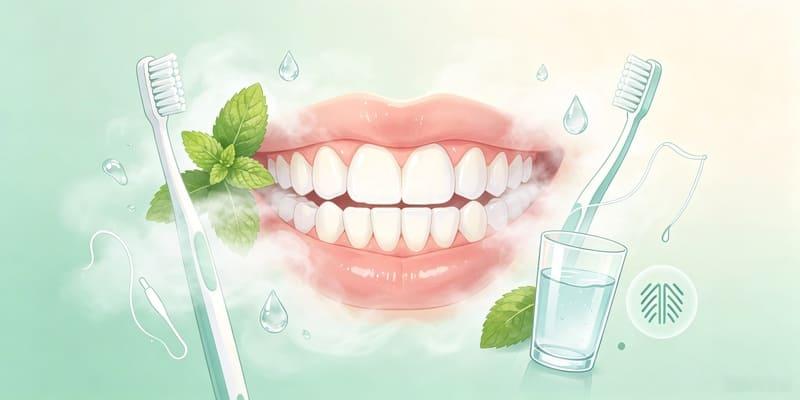
That’s also why the most useful routines tend to feel almost boring: a gentle tongue clean (especially toward the back), daily interdental cleaning where brushes miss, and a mouth feel that stays comfortably wet rather than “scoured.” Strong, minty products can mask things briefly but still leave you dry, which can make odor rebound. And if congestion is part of your pattern, breath may improve on the same days your throat feels less coated—because fewer proteins are collecting behind the tongue.
It’s worth getting checked if there’s bleeding gums, persistent bad taste, pain, loose teeth, or breath that stays strong despite a couple of weeks of consistent tongue-and-gumline care. The same goes for frequent heartburn, trouble swallowing, or ongoing one-sided tonsil/throat symptoms—especially if the pattern is worsening rather than simply inconsistent.