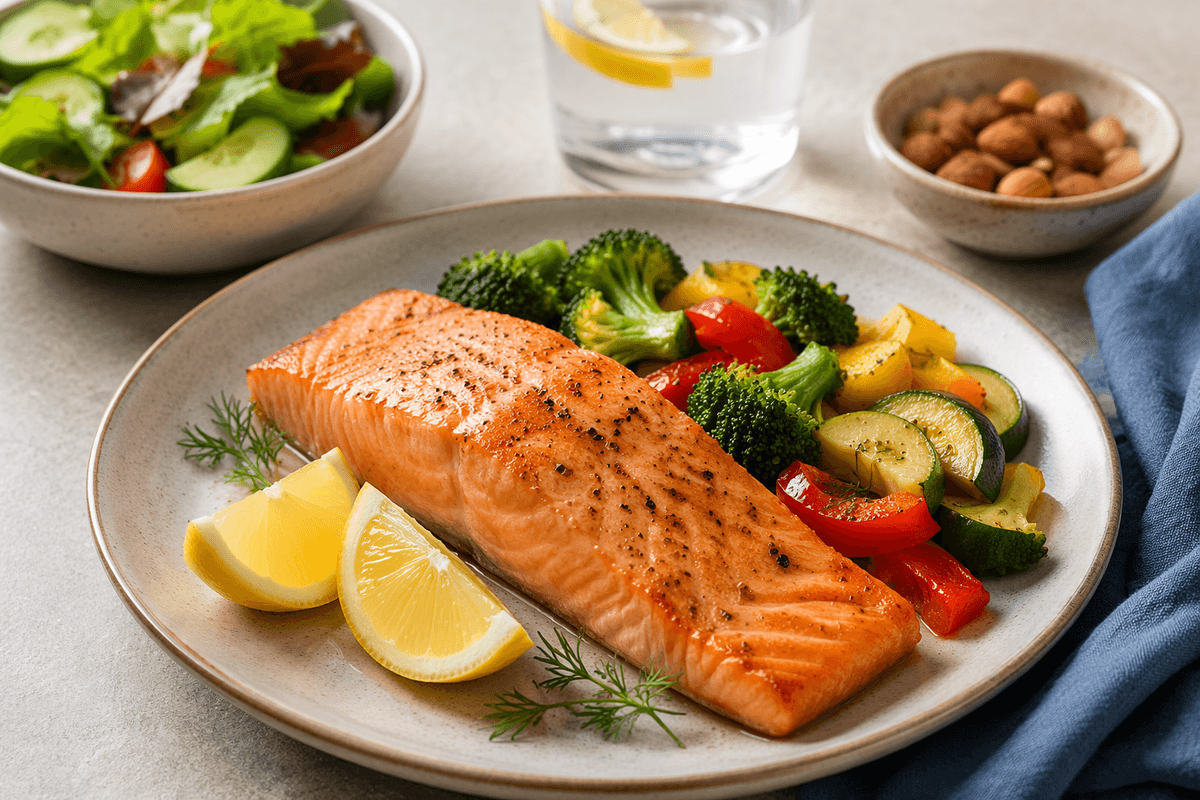
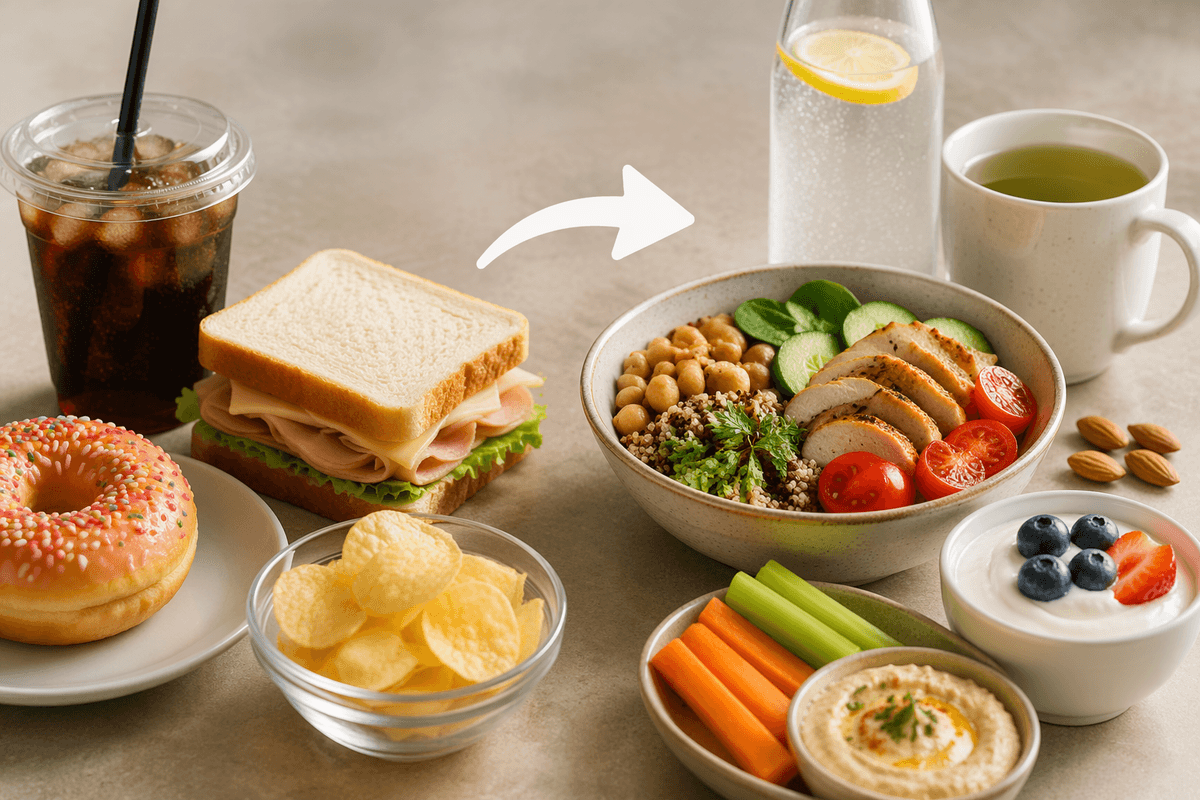
Why fish feels like a “healthy swap”
It often starts at the store without much drama: you reach past the deli meat or ground beef and grab fish instead, because it just feels “cleaner.” The label might even help—“wild-caught,” “lean protein,” “heart healthy”—and suddenly dinner seems like the responsible choice before you’ve cooked a thing.
That feeling isn’t random. Fish usually replaces something that’s higher in saturated fat, and the softer, flaky texture can read as “lighter,” even when the portion is similar. Some fish also brings omega-3 fats, which people associate with heart and brain benefits, so the swap feels like it comes with a bonus.
The snag is that “fish” covers a lot. A breaded fillet, smoked slices, or a can “packed in brine” can shift the trade-offs—more oil, more sodium, or a very different fat profile. Even the species matters: bigger, longer-living fish can carry different baggage than smaller ones, so repeating the same pick every week may not land the way you expect.
Omega-3 payoff versus calorie and cost realities
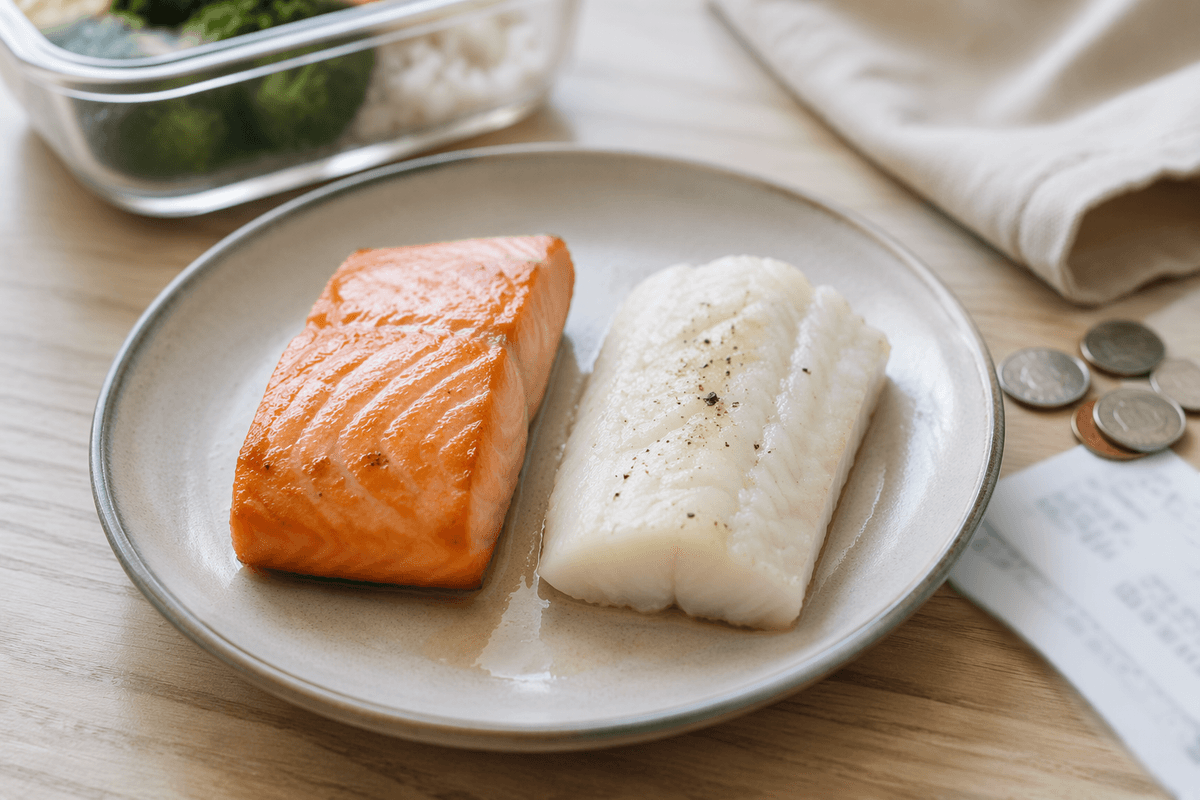
You notice it most when the pan is already warm: salmon leaves a glossy sheen behind, while cod barely does. That little detail often matches what your body registers later—some fish feels more satisfying, but also “heavier,” even if the plate looks the same. It can be confusing when you bought it for the omega-3s and assumed it would automatically be the lighter option.
Fatty fish tends to deliver more omega-3 payoff per serving, but it also usually carries more calories, and it’s often the pricier part of the seafood case. Meanwhile, cheaper standbys—tilapia, pollock, many white fish fillets—can be lean and straightforward, yet don’t bring the same omega-3 lift. That gap is why people end up oscillating: splurging on salmon some weeks, then sliding back to whatever is on sale and hoping it “counts” the same.
Even the budget-friendly shortcuts have their own math. A can “packed in oil” can quietly stack extra calories, while “packed in brine” may push sodium high enough to matter if it’s becoming a default lunch. These choices are “bad,” but that repeating them without noticing the label details can turn a health-motivated habit into a different pattern than you intended.
Mercury concerns that change how people choose
Sometimes the hesitation shows up before you even check the price: you reach for tuna or swordfish, then remember a half-heard warning about mercury and put it back. It can feel oddly vague—like you’re supposed to know which fish are “fine” and which ones are a problem, without much help in the moment.
What often gets missed is that mercury isn’t evenly spread across seafood. It tends to build up over time, so larger, longer-living, predatory fish can carry more of it than smaller fish lower on the food chain. That’s why two “fish dinners” can land differently, even if both look like a clean, protein-forward choice.
The familiar picks people rely on—big tuna steaks, certain sushi favorites, “special occasion” fillets—are also the ones that can make weekly repetition feel less comfortable. Rotating with smaller options can be less exciting, but it usually makes the overall pattern feel easier to live with.
Canned, frozen, and fresh: nutrition meets convenience
The decision usually gets made with your hands, not a nutrition philosophy: a freezer-door fillet because you’re tired, a can because lunch needs to happen, or “fresh” because it looks like the healthiest version. Then you get home and realize the same fish can behave very differently depending on how it’s been handled—drier, saltier, richer—before you’ve added anything.
Canned fish can be an easy win for protein and omega-3s, but the liquid matters more than people expect. “Packed in oil” can make the portion feel more filling while quietly raising calories, and “packed in brine” can push sodium higher than you’d guess from a small can. Smoked fish often lands in the same category: convenient, flavorful, and easy to overdo without noticing the salt load.
Frozen is where the trade-offs get less visible. Plain frozen fillets are often close to fresh nutritionally, but breaded or pre-sauced options can shift the balance fast. The convenience is real; the labels just don’t always make it feel that way.
Farmed and wild debates that rarely feel settled
The phrase “wild-caught” can change how the fillet feels in your cart, like it’s automatically the more natural, safer choice. Then you flip the package over and see farm-raised right next to it, sometimes cheaper, sometimes with a higher fat number, and the certainty starts to slip.
Part of the tension is that “farmed” and “wild” describe the supply chain more than the nutrition outcome. Farmed salmon, for example, often ends up fattier, which may mean more omega‑3s but also more calories per serving. Wild versions can be leaner and still omega‑3 rich, yet the difference isn’t always as dramatic as labels suggest once you factor in portion size and cooking.
The other piece is comfort. People may worry about contaminants on either side—mercury by species and size, other residues by how the fish was raised—so the debate rarely resolves into one “right” answer. What tends to settle it, in real kitchens, is whether you can rotate choices without feeling like you’re guessing every week.
Cooking methods that quietly shift the health profile
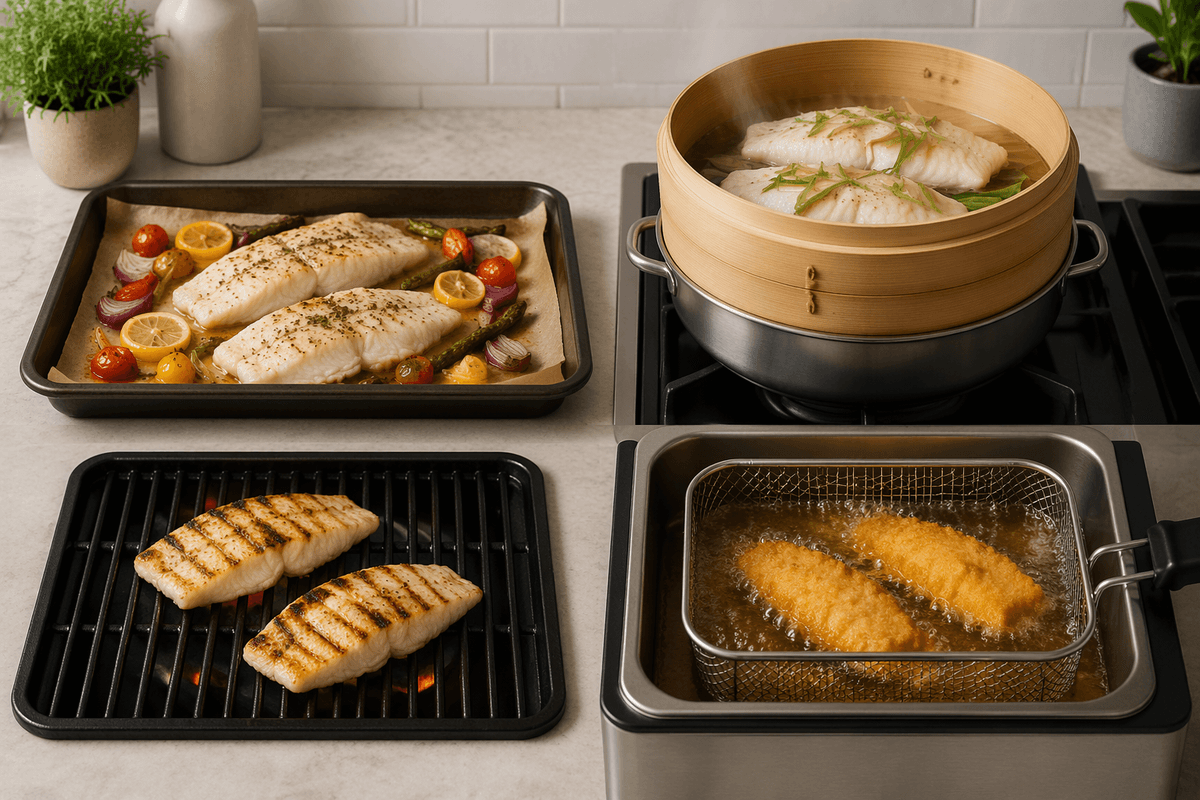
You can usually tell halfway through cooking whether the “healthy fish dinner” is about to turn into something else. A thin white fillet that should be delicate suddenly drinks up oil, or a breadcrumb coating goes from crisp to greasy, and the portion feels heavier before it even hits the plate.
The method matters because fish is porous and cooks fast. Pan-frying or deep-frying can add more fat than people expect, especially with breaded fillets that hold onto oil. Creamy sauces do something similar in a quieter way—still “fish,” but now the calories come from what it’s sitting in. Meanwhile, baking, steaming, and grilling tend to keep the add-ons more visible, so it’s easier to notice when a drizzle becomes a pour.
Then there’s the salty side of “easy.” Smoked fish, teriyaki glazes, and ready-made seasoning blends can make a small serving taste bold, but they also make sodium harder to estimate. If the same preparation becomes your default, the health profile shifts—even when the fish choice itself hasn’t.
Fitting fish into a balanced plate consistently
It’s usually not the fish that throws the week off—it’s what it replaces and what shows up beside it. A “light” fillet can end up next to a mountain of fries, or canned tuna turns into a sandwich where the saltiest part is the bread, the cheese, and the fish all at once.
Consistency tends to come from noticing the repeating cues. If your go-to is breaded or fried, the meal starts leaning on added fat; if it’s smoked or “packed in brine,” sodium can become the quiet theme. If it’s always a larger predatory fish, the rotation can feel less comfortable over time, even when the portions are reasonable.
What usually holds the balance is a loose mix: some fatty fish for omega‑3 payoff, some lean fish for simpler protein, and a few canned or frozen options that don’t always come with oil, breading, or heavy sauce built in. It’s not perfectly tidy in real life, but that small rotation keeps any one trade-off from becoming the whole pattern.