Activity isn’t workouts, it’s daily movement volume
You might notice it first on an ordinary day: you’ve “been up and about,” but your legs still feel a little heavy on the stairs, or you get up from the couch and need an extra beat before you move smoothly. That can be confusing, especially if you did a decent workout earlier in the week and expected that to cover you.
For a lot of bodies in the 50–70 range, mobility holds up best when movement is spread through the day, not stored in one session. A single workout can be real work, but long sitting can quietly erase some of that benefit by letting hips and ankles stiffen and by giving postural muscles fewer reminders to stay “online.” It’s less about fitness guilt and more about volume: how often your joints go through comfortable ranges and how often your muscles have to do small, everyday jobs.
Ten minutes here and there can matter, yet it’s easy to discount because it doesn’t register as exercise. Over months, though, those small deposits tend to show up as easier carries, steadier turns, and less of that long warm-up just to feel like yourself.
Comfort often drives motion more than motivation
It can start with a tiny negotiation you barely notice: you reach for something low, feel a familiar tug in the back of the hips or knees, and you choose the higher shelf instead. Later, you realize you didn’t really “skip movement” on purpose—you just steered around the positions that feel awkward, tight, or slightly risky that day.
That’s why motivation is an unreliable driver for a lot of people. Comfort tends to run the schedule. When joints are a bit stiff or your balance feels off, your brain quietly favors the path with fewer surprises: fewer trips up the stairs, shorter strides, more hand support, more sitting “just for a minute.” Those choices make sense in the moment, but they also mean the joints spend less time in fuller ranges and the muscles do less stabilizing work, so the next attempt can feel even less comfortable.
One good morning can make you think it’s solved, and one sore afternoon can make you pull back for days. Noticing that comfort loop—rather than judging your willpower—usually explains why your activity level drifts without you deciding to change it.
Walking habits that reduce friction and keep consistency

The days walking happens easily usually aren’t the days you feel “motivated.” It’s the days your shoes are by the door, the route is familiar, and you don’t have to talk yourself into the first two minutes. If you’re waiting to feel loose before you start, you may end up not starting.
A low-friction walk often looks almost unimpressive: a short loop after breakfast, a lap while the coffee brews, a few minutes in a parking lot before you drive home. Those small starts give ankles, hips, and back a chance to warm gradually, so your stride tends to lengthen on its own instead of being forced.
Weather, errands, or a cranky knee can make the “perfect” walk feel too big. In those weeks, keeping the habit tiny—just enough to remind your joints what normal range feels like—often prevents the next day from feeling like you’re starting over.
Strength and balance show up in ordinary tasks
It might show up when you’re carrying a laundry basket and realize you’re holding your breath, or when you step off a curb and your foot lands a little louder than you expected. Nothing “hurts” exactly—things just feel less automatic, like your body is double-checking the move before it commits.
That’s often what everyday strength and balance look like: not a max effort, but small moments of control. Getting up from a low chair without using your hands, turning to grab something behind you without shuffling your feet, climbing stairs without pulling on the railing—those are little tests of leg power, ankle and hip range, and how quickly your stabilizers wake up. When you’ve had a lot of sitting days, those stabilizers can feel a beat late, so you compensate with slower steps, more bracing, and tighter movement.
You might walk fine in a straight line, then feel wobbly reaching into the back seat or standing on one leg to put on a shoe. Those “ordinary” tasks ask for side-to-side control and quick adjustments, and if they’re feeling harder lately, it’s usually a signal worth noticing—not panicking about, just tracking.
Sitting breaks matter because bodies ‘downshift’ quickly
You notice it most when you stand up “just to grab something” and your first few steps feel shorter, almost cautious. Your hips don’t want to open, your ankles feel a bit wooden, and for a moment you’re not sure if it’s stiffness, fatigue, or simply that you’ve been parked too long.
Bodies downshift quickly because sitting is an efficient position: the bigger postural muscles do less, joints stay in smaller ranges, and the nervous system gets fewer balance reminders. After a stretch of stillness, it can take longer for circulation to pick up and for those stabilizers to re-engage, so the first movement feels creaky or slightly unsteady even if nothing is “wrong.”
One day you pop up fine; the next day, the same chair feels like a trap. That’s why brief standing or walking breaks often matter more than they look like—they prevent the reset from getting so dramatic.
The ‘be careful’ trap can create new discomfort
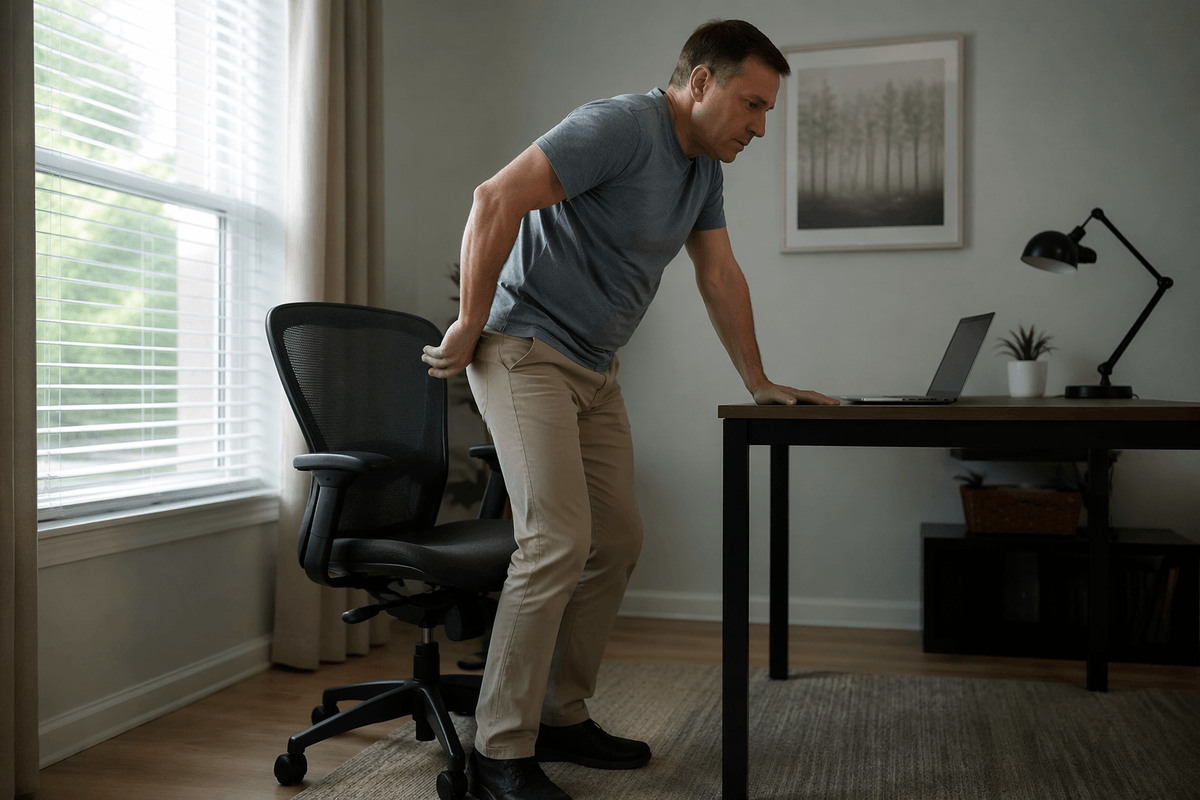
You can feel it in the way you approach the next attempt: the hand goes to the railing sooner, the steps get a little smaller, and you “protect” a hip or knee that isn’t even actively hurting. It’s reasonable—no one wants to flare something up—but the shift can be so subtle you don’t notice you’ve changed how you move until you’re more stiff at the end of the day.
The “be careful” trap often isn’t about one big avoidance. It’s the accumulation of small edits: less knee bend when you sit, a shorter stride so you don’t have to load one leg, more twisting from the low back because the hips feel guarded. Those workarounds can reduce discomfort in the moment, yet they also keep joints from visiting their comfortable end ranges and keep certain muscles from taking their usual share of the work. Over time, that can make the original area feel even more sensitive—and sometimes a different area starts complaining because it’s picking up the slack.
The caution can feel like “good form.” If the pattern continues, it can help to notice whether you’re avoiding sensation or avoiding uncertainty. A little normal effort often feels different from a sharp warning, but when everything gets treated as a warning, your movement options quietly shrink.
Designing your day around energy, not willpower
Some afternoons it isn’t pain that stops you—it’s that flat, heavy feeling where even standing up sounds like work. Then you catch yourself thinking, “I’ll do it later,” and later comes with a stiffer first step and less patience for anything that feels effortful. That’s not a character flaw; it’s often a timing problem.
Willpower asks you to override low energy. Energy-based planning asks you to spend your “easy movement” minutes when they’re naturally available—right after the first warm-up of the day, between errands, or in the small gaps before you sit down again. When those windows pass, your body may downshift: joints stay in smaller ranges, stabilizers get quieter, and restarting feels like a bigger ask than it should.
It helps to notice your predictable dips and design around them, even if it’s imperfect. On lower-stamina days, a short bout that keeps hips, ankles, and legs awake can be enough to prevent that end-of-day stiffness from turning into a multi-day slowdown.