You’ve got limited days and a fixed budget
The first real constraint usually shows up before anyone prices flights: the calendar. You have a set number of days off, a checkout time, maybe a kid’s camp ending on Friday, and suddenly the travel days are competing with the vacation days.
Then the budget hits in a different way. The airfare number is obvious, and the gas estimate feels obvious, but neither is the “trip cost” yet. That total has to include what happens because you chose that mode: airport parking or rides, bag fees, a rental car, or, on the driving side, an overnight stop, extra meals, and the quiet cost of putting hard miles on your vehicle.
When days and dollars are both capped, the decision stops being “cheaper” and turns into “what can’t break”: the cash limit, or the time limit.
Name the constraint you can’t negotiate this trip
That “what can’t break” question gets uncomfortable fast, because most trips have one hard edge. Sometimes it’s the cash ceiling on the card this month. Sometimes it’s the Sunday night return because Monday isn’t flexible. Either way, the mistake is treating both as soft, then watching the plan collapse when one surprise cost or one late arrival shows up.
Pick the single constraint you won’t bargain with and say it out loud: “We cannot spend more than $X all-in,” or “We cannot lose more than Y hours door-to-door.” Not both. If you try to protect both perfectly, you end up with the worst version of each—cheap flights at bad times, or a drive that steals two vacation days.
Once that one line is set, the math gets cleaner. You’re not hunting for “cheapest,” you’re screening out anything that violates the one rule you actually mean.
Driving seems cheaper until you price your time

The drive option often looks like the “responsible” choice because the first numbers are familiar: gas, maybe a toll or two, and you’re using your own car. But once the one non-negotiable constraint is on the table, driving has a habit of quietly breaking it—usually the time limit. A ten-hour drive isn’t ten hours; it’s departure timing around checkout, food stops, traffic that clusters around the same bottlenecks every weekend, and arriving too tired to treat the first night like part of the trip.
Start pricing time the same way you price cash. Take the door-to-door driving hours, add a realistic cushion (at least 10–20%), then assign a value to each adult hour you’re giving up—pick a number you can defend, even if it’s crude. For some households it’s a lost workday, for others it’s the value of two vacation days that were paid for and can’t be replaced. When that number is written down, “free” travel days stop being free.
And the money side of driving usually isn’t just fuel. Wear-and-tear is real, but the more immediate leaks are en-route costs: one overnight hotel because you refuse to drive past midnight, two extra restaurant meals, and the tendency to justify “small” purchases at gas stations because the day already feels long. The spreadsheet changes most when those frictions are treated as expected, not optional.
Flying feels faster, then delays rewrite the plan
Once you start treating those frictions as expected, flying can look like the clean fix—two hours in the air instead of ten on the road. But the real comparison isn’t “flight time” versus “drive time.” It’s door-to-door time under a reliability constraint: can you still make Sunday night, can you still catch the first booked night, can you still function the next morning?
The schedule risk shows up in places people don’t price. A 6:00 a.m. departure often forces a paid airport ride or long-term parking, plus an earlier hotel checkout decision. A late arrival can trigger a lost prepaid activity, a no-show fee, or an extra day of rental car charges if the counter closes. Even when the airline covers nothing, the household still eats meals, transit, and replacement bookings in real time.
If flying is the choice, budget a delay buffer on purpose: a “plan B” fund (rebooking, hotel, rides) and a time cushion (half-day flexibility). Without that, the faster option becomes the one that breaks the trip’s one non-negotiable rule.
People and gear change the math more than miles
Then somebody says, “But there are four of us,” and the clean comparison breaks. Per-person airfare scales fast, while a car’s cost barely moves until you add a second vehicle. If two adults can fly on points but the kids can’t, or one ticket jumps because of weekend timing, the “cheaper” choice flips without the distance changing at all.
Gear does the same thing. A stroller, car seats, a cooler, beach chairs, skis—stuff that feels normal for a drive turns into bag fees, oversized charges, and airport hauling. Even if the bags are “free,” you may end up paying for the thing you used to avoid: a larger rental car to fit it all, plus the time cost of pickup lines and loading at the curb.
The hidden constraint is coordination. A family split across two flights, a late bag, or one missing car seat can turn a three-hour trip into a day that burns money in small, nonrefundable ways. Those people-and-gear frictions are usually bigger than the miles on the map.
Your risk tolerance decides more than your spreadsheet
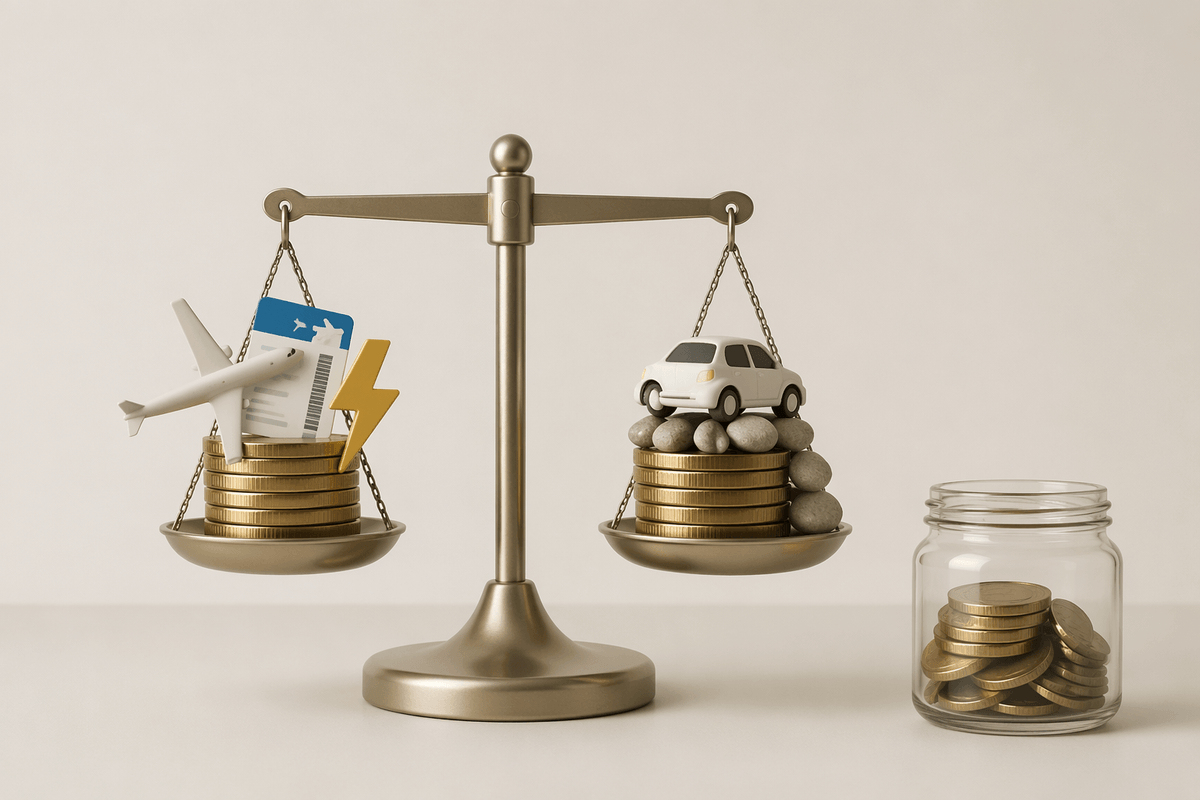
At this point the spreadsheet usually “proves” one option, but the decision still feels shaky because the math isn’t just totals—it’s volatility. A $250 airfare savings can vanish if a cancellation forces a same-day rebook, an extra hotel night, and last-minute ground transport. The average cost looks fine; the worst-case cost is what breaks the trip.
Driving has the opposite profile: fewer single-point failures, but a wider band of small risks—tire, overheating, weather, or arriving too late to use the first prepaid night. If the plan can’t absorb a 3–6 hour slip without domino fees, that’s a real cost.
The clean move is pricing buffers as intentional line items: “delay fund” for flying, “contingency night” for driving. The option you can afford under stress is the one you can actually count on.
Workarounds when neither option fits cleanly
Sometimes both columns fail the test: flights fit the time limit but violate the cash ceiling once bags, transfers, and a rental car land; driving fits the cash number but eats the first and last day in a way that makes the trip feel like a chore. That’s usually when people start forcing the spreadsheet instead of changing the shape of the trip, and the penalties show up later as rushed mornings, sunk reservations, or “one more charge” that pushes the card over the line.
The workable fixes tend to be unglamorous. Pick a closer airport with cheaper fares even if it adds a 60–90 minute drive, then price that parking and fuel explicitly. Or do a “drive-then-fly” split: drive to a hub city the night before, sleep once, and take the first flight that doesn’t require a 4:30 a.m. alarm. If the rental car is what breaks flying, shift lodging to a walkable area and commit to two rideshare days instead of seven.
On the driving side, the cleanest workaround is admitting an overnight stop is mandatory, then booking it early enough that it’s a controlled cost, not a desperate one. If miles are fine but fatigue isn’t, swap drivers, leave after dinner, and treat the hotel as the price of arriving functional. The goal isn’t finding a perfect mode; it’s buying back reliability with the smallest, most predictable add-on.
Make the call using a simple trip scorecard
By now the numbers are close enough that the decision needs a tiebreaker you can live with. A simple scorecard keeps it honest: four rows, each scored 1–5 for both options—All-in cash (including buffers), Door-to-door time (including cushions), Reliability risk (worst-case, not average), and Friction (bags, gear, kid logistics, pickup lines). Put your one non-negotiable constraint as a “must pass” gate, not a score.
Then weight the rows before you total anything. If Sunday night return is sacred, Reliability gets a 2x weight. If the card balance is the stress point this month, Cash gets 2x. Add one final check: if the winning option requires “everything going right” to work, it’s not really winning—it’s just optimistic.