Why “normal” environments can still strain you
You can sit down in a perfectly ordinary room—clean desk, familiar chair, nothing “wrong”—and still feel your shoulders creep up, your jaw tighten, or your thoughts start skittering. Later it’s easy to label it as a bad mood or a motivation problem, because nothing obvious happened.
But “normal” is often just “common,” not “neutral.” The body keeps tally in the background: a little glare that makes you squint, a low fan hum you keep filtering out, a chair edge that pushes you into a shallow, braced posture. Each one is small enough to ignore, yet constant enough to ask for tiny corrections all day.
The strain doesn’t always feel like stress; it may show up as an afternoon crash, a faint headache, restless legs, or the urge to snack while you’re technically not hungry. When the pattern repeats in the same places, it starts to look less like willpower and more like exposure.
Light and noise reshape sleep beyond your awareness
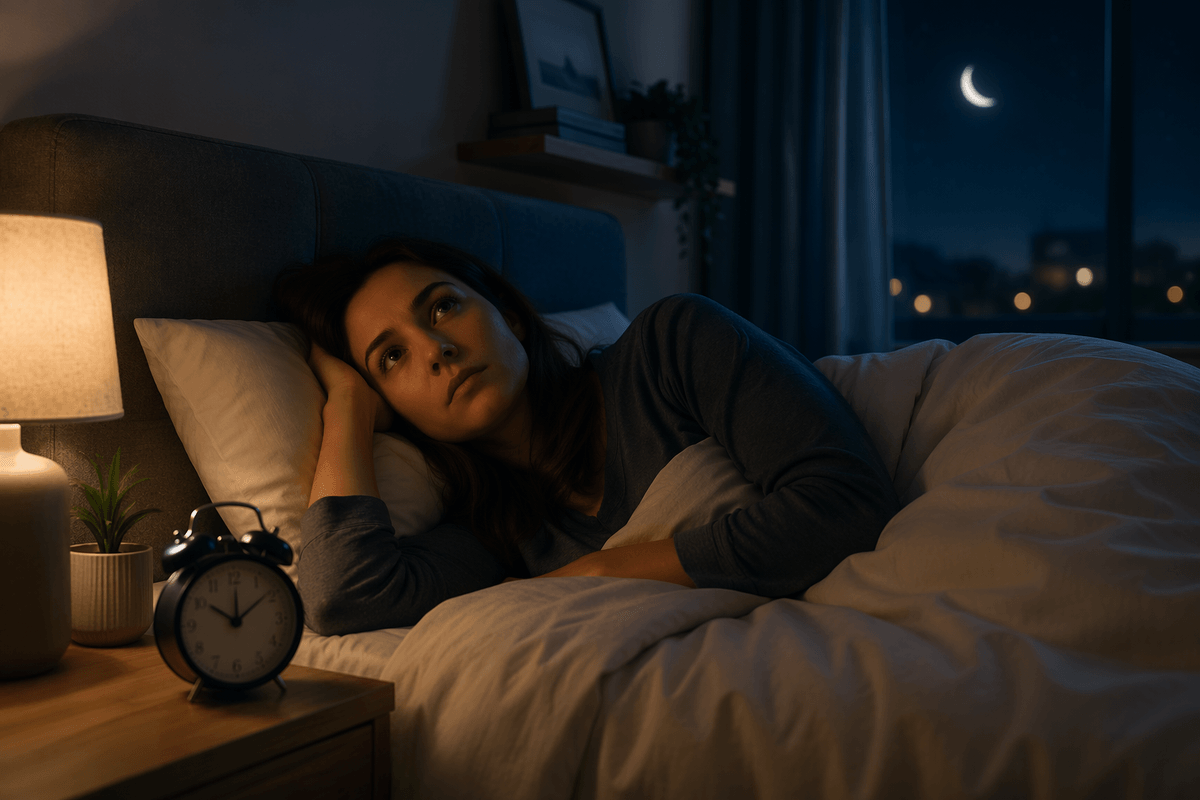
It often starts at night in a way that doesn’t feel dramatic: you get into bed on time, but your mind stays oddly “on,” or you wake up without a clear reason and can’t tell what changed. The room seems quiet enough. The lighting feels normal. Yet your body may be treating it like it’s still daytime.
Indoor light—especially bright overheads, phone glow, and TVs in the corner of your vision—can keep your internal clock from fully shifting into sleep mode. It’s not just about feeling sleepy; light can nudge alertness signals and delay the gradual dip that helps sleep come easily. When the timing slides even a little, the next day can feel like you’re chasing focus with extra coffee rather than starting steady.
Noise works in a similarly sneaky way. A neighbor’s bass, hallway doors, traffic, or a cycling HVAC unit may not “wake you up” in the obvious sense, but it can fragment sleep with small, forgettable arousals. You may only notice the outcome: lighter sleep, more vivid dreams, or that tired-but-wired feeling that’s hard to pin on anything.
Indoor air, temperature, and humidity affect comfort
Some afternoons you realize you’ve been taking shallow breaths without meaning to, like the room is asking you to do a little more work just to feel settled. You might rub your eyes, clear your throat, or keep reaching for water, and still not be sure whether it’s you, the season, or something you ate.
Indoor air can be “fine” by smell and still feel tiring when it’s stale or overly dry. When ventilation is limited, exhaled air and everyday pollutants can build up, and your body may respond with low-level irritation—more blinking, a scratchy throat, a subtle headache, or that fuzzy focus that makes simple tasks feel heavier. It’s inconsistent, too: one room feels okay, another feels oddly draining.
Temperature and humidity add their own noise. A room that runs a few degrees warm can quietly raise restlessness and reduce patience, while a cold draft can keep muscles slightly braced. When humidity swings, your nose and skin may feel it first—then your mood follows, and it’s easy to misread that shift as “just a bad day.”
Space layout nudges eating, movement, and posture
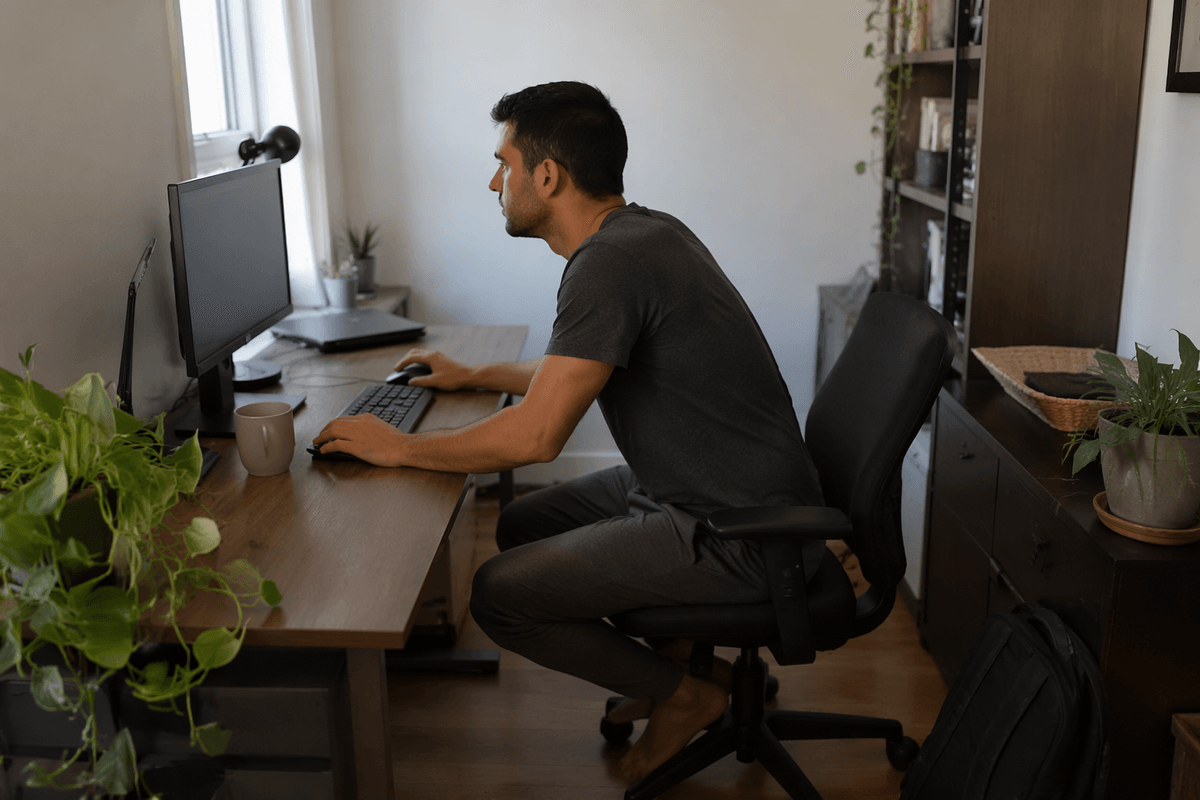
Halfway through a work block, you may notice you’ve been perched at the edge of your chair, one shoulder slightly higher, feet tucked back like you’re ready to stand—except you don’t. The space around you can quietly decide what your body thinks is “available”: how far you reach for a mouse, whether your screen pulls your chin forward, whether there’s room to shift positions without bumping something.
Layout also changes how often you move without you choosing it. When the charger, printer, or water is across the room, you get natural breaks. When everything is within arm’s reach, the day can flatten into long stillness, and stiffness shows up later as a neck ache or restless legs at night. Even a narrow walkway or cluttered floor can create tiny hesitations that add up—less pacing, fewer stretches, more sitting in the same shape.
Food cues work the same way. A snack bowl in your line of sight, a kitchen you pass on every trip to the bathroom, or delivery apps one click from your desk can make “not that hungry” feel like a decision you keep having to remake. When habits shift in one location but not another, it’s often not a character flaw—just a room that keeps nudging the same few behaviors.
Social surroundings quietly set your stress baseline
You might notice it in the smallest exchanges: a coworker’s sigh, a roommate moving through the hallway, someone hovering just long enough for you to feel watched. Nothing is “happening,” but your body acts like it should stay slightly ready—breath a bit higher, shoulders not fully dropping, attention split between the task and the room.
Social surroundings can work like a constant background signal. When you feel observed, interrupted, or responsible for staying responsive, your nervous system may keep a low level of alertness running, even if you’re sitting still. Over hours, that can look like jittery focus, impatience, or a habit of checking messages too often because your brain expects the next demand.
The same workload may feel manageable alone, but heavier in a shared space with unpredictable noise, expectations, or subtle comparison. In those settings, “stress” doesn’t always feel emotional—it can show up as jaw tension, stomach fluttering, or a sudden need to snack or scroll just to take the edge off.
When a sensible change creates unexpected discomfort

It can be jarring when you “fix” something and feel worse. You swap in a standing desk and your low back gets cranky by lunch. You buy a brighter lamp and end the day with tight eyes and a humming headache. The change makes sense, so the discomfort feels like a personal glitch.
Often it’s just a different kind of load. Standing can trade chair pressure for more calf and foot work, and it’s easy to lock your knees without noticing. Brighter, cooler light can keep your system a little more alert, so you blink less and your face stays subtly braced. Nothing is dramatic, but it’s steady.
A tweak may feel “wrong” because your body hasn’t mapped it yet, or because it interacts with something already there—dry air, noise you were tolerating, a screen angle that now pulls your neck forward. When the same discomfort shows up in the same place, it’s usually a pattern, not stubbornness.
Building a clearer read on what’s influencing you
Sometimes the clue is how fast your body changes rooms. You step outside for a minute and realize your breath drops lower, or you sit in the car and your shoulders finally loosen. Then you walk back in and the tension quietly returns—easy to miss unless you’ve felt the contrast.
A clearer read usually comes from noticing “when and where,” not from finding one perfect cause. If the afternoon crash happens only at one desk, or the headache shows up only under one set of lights, that repeatability matters. It suggests your brain is responding to a steady input—glare, stale air, a posture you always fall into there—more than a random dip in discipline.
Sleep can blur the signals, stress can amplify them, and some exposures stack: a warm room plus background noise plus a screen that pulls you forward can feel like “me being off.” Treating it as a pattern to interpret—rather than a flaw to fight—can make the day feel a little more readable.