Why comfort problems often trace back to small habits
It usually starts as a small, end-of-day feeling—your lenses aren’t exactly painful, just a little “present” in your eyes. You blink a few extra times, your vision hazes for a moment, and you assume it’s just screen time or dry air. But the pattern often gives it away: Monday feels fine, and by Thursday or Friday the same lenses seem fussier, even if nothing dramatic happened.
That slow slide is often what repeated shortcuts look like in real life. Tiny amounts of old solution left in a case, a lens worn a bit past its best days, or a case that looks clean but has a thin film you can’t see can all nudge deposits and residue to build. As the surface gets less “wettable,” tears don’t spread as evenly, so the lens can feel drier and vision can look slightly foggy—especially late in the day.
A fresh pair might feel great after a rushed routine, then comfort drops again after travel, swimming, or a week of longer wear. When symptoms rise and fall with routines like that, it usually points to habits adding up over time rather than a single one-off problem.
Topping off solution creates a slow irritation cycle
It’s often the nights when you’re tired that it happens: you crack open the case, notice there’s still a little liquid in the bottom, and “top it off” to save time. The next morning the lenses can still feel fine, which is exactly why the habit sticks. Then, a few days later, you start noticing a faint sting when you first put them in, or that slightly greasy, foggy look that takes longer to blink clear.
The problem is that leftover solution isn’t neutral. Once it’s been sitting with a lens, it’s already diluted with tears and loaded with whatever the lens brought back—proteins, oils, tiny particles. Adding fresh solution on top can lower the disinfecting strength and gives residue more chances to cling to the lens surface and the case walls. Over time, that can change how evenly the lens wets, so dryness shows up earlier in the day and irritation feels more “weekly” than random.
Case hygiene breakdown looks clean but isn’t
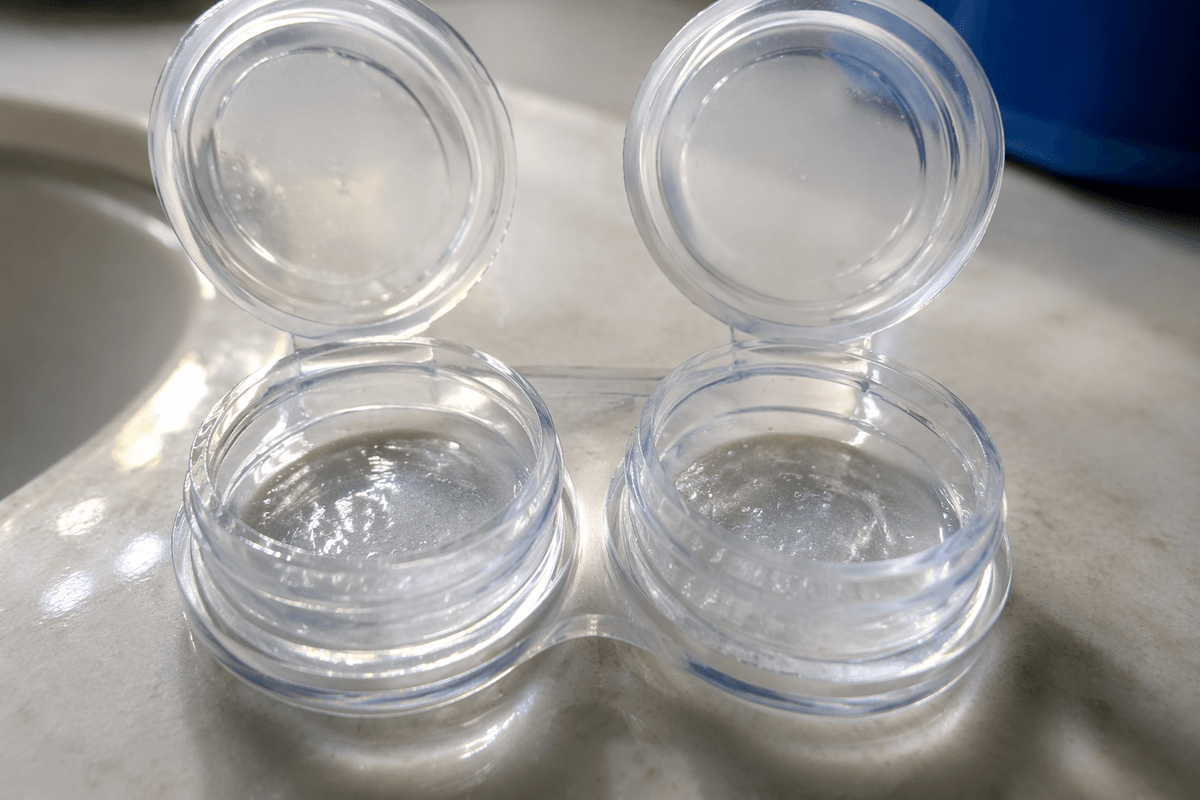
Sometimes the case is the thing people trust the most. It looks clear, it doesn’t smell, and the caps screw on like they always have—so it feels “safe.” Then you notice a familiar pattern: lenses go in fine, but by late afternoon there’s a dull scratchy feeling, or your vision gets that soft blur that doesn’t fully blink away.
What’s easy to miss is how a case can look clean while still holding a thin, slick layer on the inside. Each time a lens sits overnight, a little of the tear film and solution residue settles onto the plastic. If the case is just rinsed, wiped quickly, or left damp with the lids closed, that film can hang around and gradually turn into something that clings more stubbornly to both the case and the lens.
That’s when comfort can start “tracking the case” more than the lens—better right after a case change, then slowly worse again, even when everything else stays the same.
Rinsing with water can backfire in unexpected ways
It often happens on autopilot: you drop a lens, rinse it quickly under the tap, and tell yourself it’s better than putting it back in “dirty.” Most of the time, nothing dramatic happens right away—maybe a faint burn, maybe nothing—so the shortcut starts to feel harmless. Then a day later, the lens feels oddly dry, or your eye looks a little more pink than usual, and it’s hard to connect it to that five-second rinse.
Water doesn’t behave like lens solution. It can leave behind tiny particles and microbes, and it can also change how a soft lens holds moisture for a while. The surface may start to wet unevenly, so vision gets intermittently foggy and blinking stops helping as much. In some people, the bigger clue is timing: irritation that shows up after a shower, hot tub, or travel day can fit this pattern, even if everything else in the routine looks “normal.”
Over-wearing lenses changes how the eye responds
By the time you’re driving home, you may notice the first sign isn’t pain—it’s that “stuck” blink. The lens feels a little less floaty, like it drags for a split second, and the world goes slightly matte until you blink again. People often assume the lens just dried out, but the timing can be a clue: it shows up more when wear days run long, or when you keep a pair going past the point where it used to feel effortless.
Over-wearing doesn’t just affect the lens surface; it can change how your eyes behave under the lens. With less oxygen and more friction over hours, the front of the eye may get a bit more reactive, and the tear film can become less stable. That’s when “end-of-day” dryness starts creeping earlier, and tiny deposits that once didn’t matter begin to feel loud.
A new pair can briefly “reset” the feeling—until the same long-day pattern returns.
Mixing products and drops can destabilize comfort
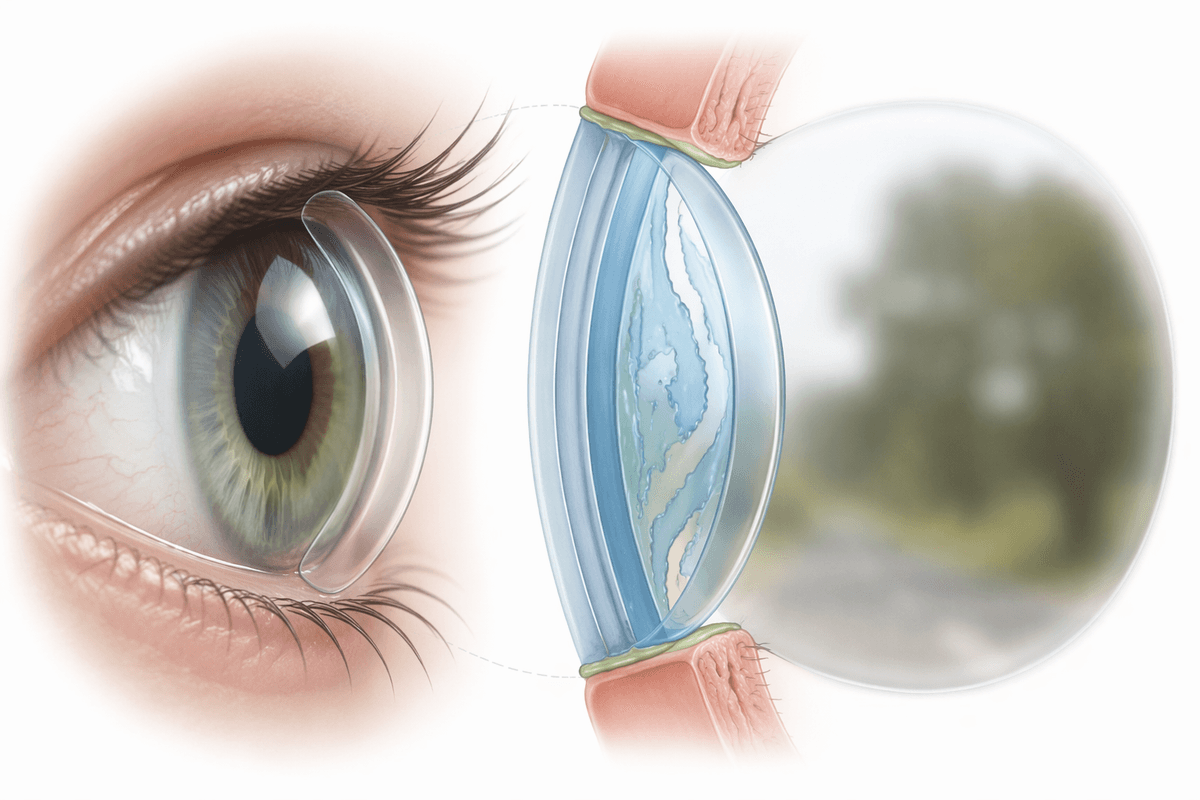
It’s usually in the afternoon that someone realizes they’ve become a “drop person.” One bottle at the desk, a different one in the car, maybe a sample from the last eye exam. The relief can feel immediate, but then there’s that odd trade-off: a brief cool comfort followed by stinging, extra blur, or a lens that suddenly feels smeary.
Mixing products can do that because each formula is built to behave a certain way on a lens surface. Some drops are meant for eyes without lenses in, some have preservatives that can cling to soft materials, and some “extra lubrication” blends can interact with the wetting agents in your multipurpose solution. Instead of a smooth tear film, you can end up with uneven spreading—comfort comes and goes, and vision looks foggy in patches.
The same drop may feel fine on a fresh lens, then feel irritating later in the week when deposits are already starting to build.
When cleaning gets too aggressive or too minimal
You can usually tell this one by how the lens feels right after you “do everything right.” The eye may water, the lens may sting for a minute, or the surface looks oddly smeary—like it’s clean, but not comfortable. Other times it’s the opposite: the lens goes in quietly, yet by midafternoon it feels filmy and your vision turns slightly foggy in a way blinking doesn’t fully fix.
When cleaning gets too aggressive, it can leave behind its own kind of irritation. Hard rubbing, overuse of peroxide or surfactant cleaners, or switching systems without noticing what the lens material tolerates can strip wetting agents or leave trace residue that changes how tears spread. Too minimal goes the other direction: quick swishes, short soak times, or reusing a case that never quite dries can let deposits and biofilm build until the lens stops wetting evenly.
If comfort seems “better on day one, worse by day four,” it usually points to buildup winning slowly. If it’s sharp or immediate after care, it may be the routine itself.