Why kids’ skin looks different from adults’
In the middle of a bath, a faint red patch can look dramatic on a child and then seem to “disappear” once they’re dry and dressed. That whiplash is part of what makes kids’ skin feel hard to read: it reacts faster to warmth, soap, rubbing, and even the pressure of a waistband, then settles again when the trigger is gone.
Under the surface, a child’s skin barrier is still building strength. When that barrier lets water escape more easily, skin can look ashy or rough in small areas, especially on cheeks, arms, and legs. It also means everyday irritants—saliva, detergent residue, pool water—may create sharp-looking edges or scattered dry dots that would barely register on an adult.
The immune side is still “learning,” too. Some kids flush or get tiny bumps quickly with heat and sweat, while others swing toward itch and scratch without much visible rash at first. The frustrating part is inconsistency: the same spot can look calm for days, then flare after a single hot afternoon or a new fabric rubbing in the same place.
Newborn peeling, milia, and baby acne confusion
When you’re peeling off a onesie and see fine flakes along a newborn’s wrists or ankles, it can feel like something is “spreading.” Newborn peeling often shows up in thin sheets after baths or diaper changes, then looks better once skin rehydrates—until the next dry moment. It’s messy-looking but tends to be more about the outer layer shedding than an active rash.
Then there are the tiny white dots on the nose or cheeks that don’t wipe away. Milia can look like clogged pores, but they’re usually firm, pinhead-sized bumps that sit quietly without much redness. They can linger long enough that it’s easy to assume a product caused them, even when nothing in the routine has changed.
Baby acne adds a different kind of confusion because it can seem to “pop up overnight.” Red bumps and small pustules may cluster on cheeks and chin, sometimes looking angrier after warmth, crying, or friction from fabrics. The pattern can be uneven—calm in the morning, blotchy by evening—making it hard to tell what’s temporary irritation versus a short-lived phase.
Birthmarks and pigment shifts that evolve gradually
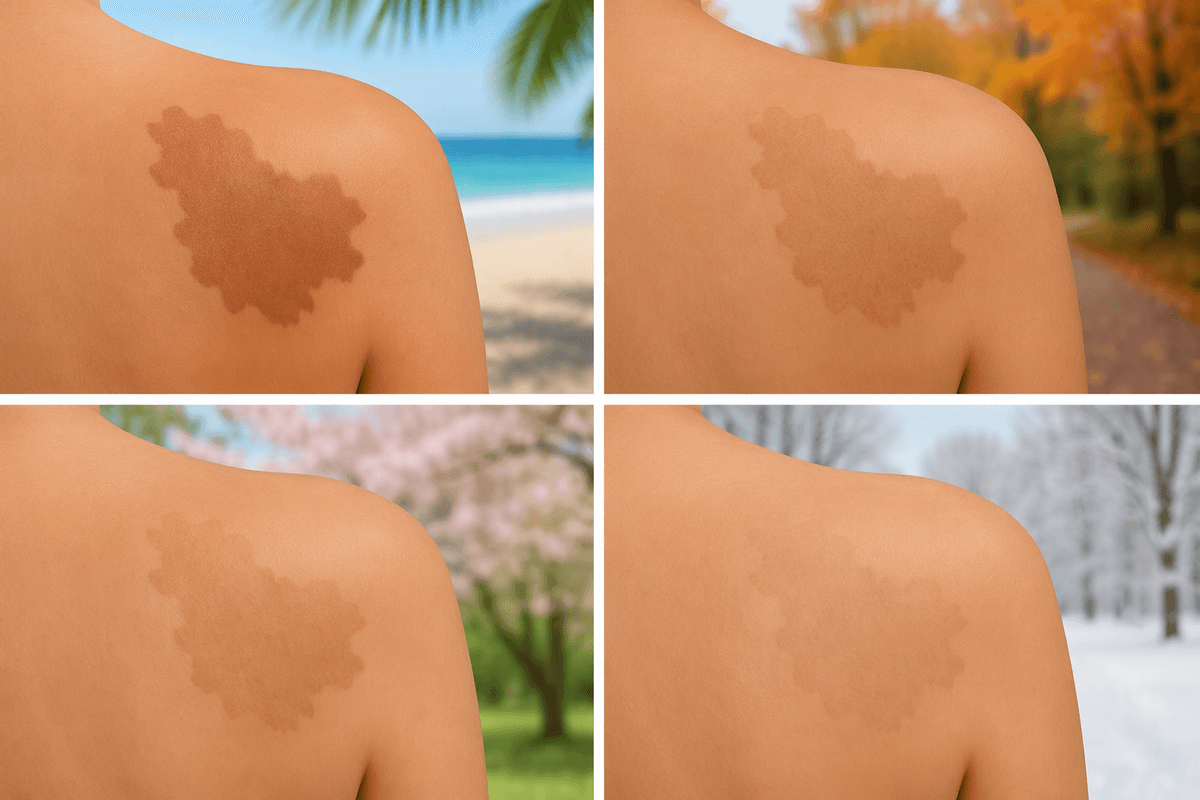
Sometimes it’s not a new bump that catches your eye, but a patch that looks a shade darker under bathroom lighting than it did last month. A birthmark can feel “suddenly bigger” when a child stretches out, even if the mark is mostly just spreading as the skin surface grows. That’s part of why these changes are hard to judge day to day—your memory is comparing a moving target.
Some marks stay flat and quietly consistent, while others shift in contrast with seasons. After more sun, a light brown spot can look sharper around the edges; in winter it may fade enough that you wonder if you imagined it. Pigment can also look uneven after irritation or scratching, because inflamed skin may temporarily deepen in color, then slowly lighten again over weeks. The frustrating limitation is timing: these changes often move too slowly for one bath-time check to tell you much.
Location can offer clues. Areas that get repeated friction—waistbands, knees, under backpack straps—may darken in a smudgy way that comes and goes, while a true birthmark tends to keep a recognizable “map” even as it shifts. If you find yourself unsure, a quick photo in similar light can be more useful than trying to decide in the moment.
Dry patches and eczema patterns behind recurring flares
Halfway through pulling on pajamas, you might notice a rough patch behind a knee that felt “fine” at bath time, then suddenly turns pink once fabric and movement warm it up. These spots can look like simple dryness, but the frustration is how they cycle—quiet for a few days, then louder after a long bath, a windy day, or a week of extra sweating.
In many kids, recurring dry patches behave less like a single rash and more like a tired skin barrier that keeps getting asked to do too much. When the outer layer is a little leaky, water escapes, skin feels tight, and tiny cracks can form that you don’t see until they sting or itch. Scratching then adds a second layer of irritation: even “light” rubbing can make the area thicker-feeling and more textured over time, so the same patch starts to return in the same place.
Patterns often show up in predictable zones—creases of elbows and knees, wrists, ankles, around the mouth, or anywhere a strap, seam, or sock line hits daily. What can throw parents off is the unevenness: one arm can stay smooth while the other looks patchy, and the redness can lag behind the itch, making it seem like it came out of nowhere when it’s been building quietly.
Heat rash, drool rash, and friction hot spots

It often shows up right when you’re buckling a car seat or lifting a sweaty shirt: a scatter of tiny red bumps on the upper chest, back, or along a waistband that wasn’t there an hour ago. Heat rash can look surprisingly bumpy for how quickly it fades, because trapped sweat irritates the surface when skin stays warm and covered. The confusing part is the timing—once the skin cools and dries, the same area may look nearly normal, making it hard to tell if it was “real” or just a brief traffic jam of sweat.
Drool rash tends to play a different trick. Around the mouth, chin, and neck folds, saliva sits like a constant wet film, then gets rubbed in by bibs, sleeves, and wiping. The result can look like a sharp red outline or small rough dots that seem worse at the end of the day, even if the child hasn’t eaten anything new. In some situations, the skin looks calmer right after cleaning, then flares again once moisture returns—more about repeated damp-and-rub than a single trigger.
Friction hot spots usually follow the gear: under a helmet strap, at sock tops, between thighs, under an arm, or where a seam hits the same spot during play. These patches can look “burned” or chafed and still be inconsistent—better on rest days, worse after a long walk or humid afternoon—because pressure plus sweat makes skin swell slightly and rub more. Noticing the shape (strap line, fold, waistband curve) can be the clue that it’s the contact pattern changing, not the skin randomly misbehaving.
Viral rashes and hives that come and go
You put a child to bed with a few pink spots on the belly, and by breakfast they’ve slid to the back or faded into almost nothing. That “moving target” quality is common with viral rashes: the immune system reacts in waves, so the skin can look blotchy for a day or two, then quieter, then briefly loud again after a warm bath or a busy, run-around afternoon.
Hives can be even more dramatic—and more misleading. They may look like raised welts with pale centers, then flatten and reappear somewhere else, sometimes within hours. It can feel like an allergy you can’t identify, but in kids they’re often a short-term overreaction to a recent virus, heat, pressure, or scratching. The limitation is consistency: the same photo taken 30 minutes later can look like a different rash entirely.
Where it lands can help you track the pattern without over-reading it. Viral rashes often spread in a loose, patchy way across the trunk and limbs, while hives tend to come and go in distinct, changeable shapes. If the skin is also acting “off” in other ways—more itch than you’d expect, swelling around eyes or lips, or welts that keep returning in the exact same outline—it’s a sign the reaction may be doing more than a simple pass-through.
Bumps from bites, warts, and molluscum clusters
It’s often when you’re drying off a shin or rubbing lotion into an elbow that you feel a bump before you really see it. A bite can leave a firm, itchy knot with a tiny center point, and on kids it may stay raised for days—especially if it gets scratched each night—so it can seem like it’s “multiplying” when it’s really one spot getting re‑irritated.
Warts tend to confuse in a quieter way. They’re usually rougher than the skin around them, sometimes with a slightly grainy surface, and they like hands, knees, and feet—places that get tiny nicks and a lot of contact. Because they grow slowly, they can feel new all at once the first time you notice them under a sock line or on a fingertip.
Molluscum often shows up as small, smooth bumps that look oddly uniform, sometimes with a faint dip in the middle. The frustrating part is the clustering: you might see three near an armpit or behind a knee, then weeks later find a few more nearby, not because something “spread overnight,” but because rubbing and skin-to-skin contact can seed new bumps along the same friction paths.
Signals that suggest evaluation rather than observation
Sometimes the moment you notice something isn’t when it looks “worse,” but when it behaves differently than it usually does—your child winces when water hits it, or they keep pawing at one spot even when the skin doesn’t look dramatic. That mismatch can matter, because discomfort often shows up before a clear change in color or texture, and kids don’t always describe what they feel beyond “it itches” or “it burns.”
In day-to-day skin changes, the pace is often the clue. A patch or bump that changes quickly in size, becomes much more tender, starts to ooze, crust heavily, or develops spreading redness that doesn’t settle after cooling down can be less about ordinary friction or a passing immune wave and more about irritation that’s getting compounded. The same goes for swelling around the eyes or lips, or hives that come with coughing, wheezing, vomiting, or a child who seems unusually sleepy—those combinations are worth prompt evaluation.
There’s also the “doesn’t fit the pattern” category: a new mole-like spot that looks very different from others, a birthmark area that starts changing shape or texture rather than just contrast, or a rash that keeps returning to the exact same single location no matter the season or routine. When something keeps breaking your expectations—especially if your photos show it evolving instead of cycling—it can be a quiet sign to stop guessing and get another set of eyes on it.