Why eye checkup timing feels surprisingly uncertain
It’s often a small thing first: you tilt your laptop a bit, bump the brightness up, and suddenly realize you’ve been squinting at the same font size for weeks. Nothing feels “wrong” enough to book an appointment, but something feels different—especially at the end of a long day.
Eye changes rarely flip like a switch. Prescriptions can drift a little at a time, dryness can build with screen-heavy routines, and glare can start showing up in specific moments (night driving, big-box store lighting) before it shows up everywhere. Because the shift is gradual, your brain quietly adapts—until one day it doesn’t, and the timing of a checkup suddenly feels overdue in hindsight.
General schedules by age are useful, but real life adds friction: work deadlines, “good enough” vision most days, and the nagging question of whether what you’re noticing is just fatigue. The result is a window of time—too early for urgency, too late to feel fully confident.
Hidden eye conditions don’t announce themselves early
You can go months thinking your eyes are just “tired,” then notice you’re hunting for brighter light at the grocery store or feeling a thin halo around headlights that wasn’t there last year. It’s easy to blame the screen, the sleep, the season. And sometimes that’s exactly what it is—temporary strain layered on a busy routine.
The tricky part is that not every meaningful change feels dramatic. Vision can stay functional while the margin gets smaller: you recover from glare more slowly, your focus snaps into place a beat later, or one eye quietly does more of the work. Dryness and irritation can also come and go, which makes the pattern harder to trust.
Meanwhile, some eye-health issues can progress with few early signals because they don’t affect sharpness right away, or because your brain compensates until it can’t. That’s why long gaps between exams can create a strange surprise: it isn’t that something “suddenly happened,” it’s that the quiet changes finally crossed into daily life.
Baseline exams versus symptom-driven visits
It’s common to wait until something interrupts your routine: the new squint during meetings, the ache behind the eyes after two hours of email, the moment night driving feels harsher than it used to. A symptom-driven visit makes sense because it’s tied to a problem you can describe. The symptoms often show up late, after you’ve already been compensating—moving closer, blinking less, relying on one eye more than you realized.
A baseline exam works differently. Even when you “see fine,” it gives a reference point for small shifts: how your prescription sits today, whether dryness is showing up on the surface, how your eyes work together up close. Without that starting line, later changes can feel like they came out of nowhere.
In practice, many people end up mixing both—an occasional baseline check, plus earlier visits when the day-to-day friction starts repeating.
Age-based intervals are shorthand, not a rule
You might hear “every year” or “every two years” and treat it like a calendar rule—then realize your eyes don’t change on a schedule that neat. One year you’re fine. The next, you’re leaning closer to your phone at night, but only when you’re tired, so it’s hard to decide whether it “counts.”
Age-based intervals are really a shortcut for probability, not a promise. As the years go on, certain shifts become more likely—near focus gets less flexible, contrast can feel softer in dim rooms, and glare can linger longer after bright headlights. None of that has to arrive at once, and screen-heavy days can make the same eyes feel different depending on sleep, humidity, and how long you went without blinking.
That’s why two people the same age can need very different timing. If your vision feels stable most days but you’re noticing repeat patterns—more squinting, needing brighter light, slower “snap” into focus—those everyday cues often matter more than the number on a chart.
Personal risk factors that shorten the schedule
Sometimes the clue isn’t blurry vision at all—it’s the way your eyes feel after an ordinary day. The gritty stretch in the afternoon, the headache that shows up only after video calls, the sense that you need a few extra blinks to “reset.” When that kind of friction repeats, longer gaps between exams can get harder to justify, even if you can still read, drive, and work without obvious trouble.
Personal risk factors tend to shrink the comfortable window. A family history of glaucoma or certain retinal problems can raise the stakes of catching subtle changes early, before they interrupt sharpness. Diabetes, high blood pressure, and some medications can also affect eye tissues and blood vessels in ways that don’t always feel like a vision issue at first. Even high prescriptions—especially stronger nearsightedness—can come with more reasons to keep an eye on the back of the eye, not just the numbers on the lens.
And then there’s the everyday risk factor people underestimate: screens. Long stretches of close work often mean fewer blinks and more surface dryness, which can make your vision fluctuate and mimic “it’s just fatigue.” If the pattern keeps showing up—more glare at night, slower focus changes, needing brighter light—it may simply mean your eyes have less buffer than they used to.
When a sensible delay creates unexpected confusion
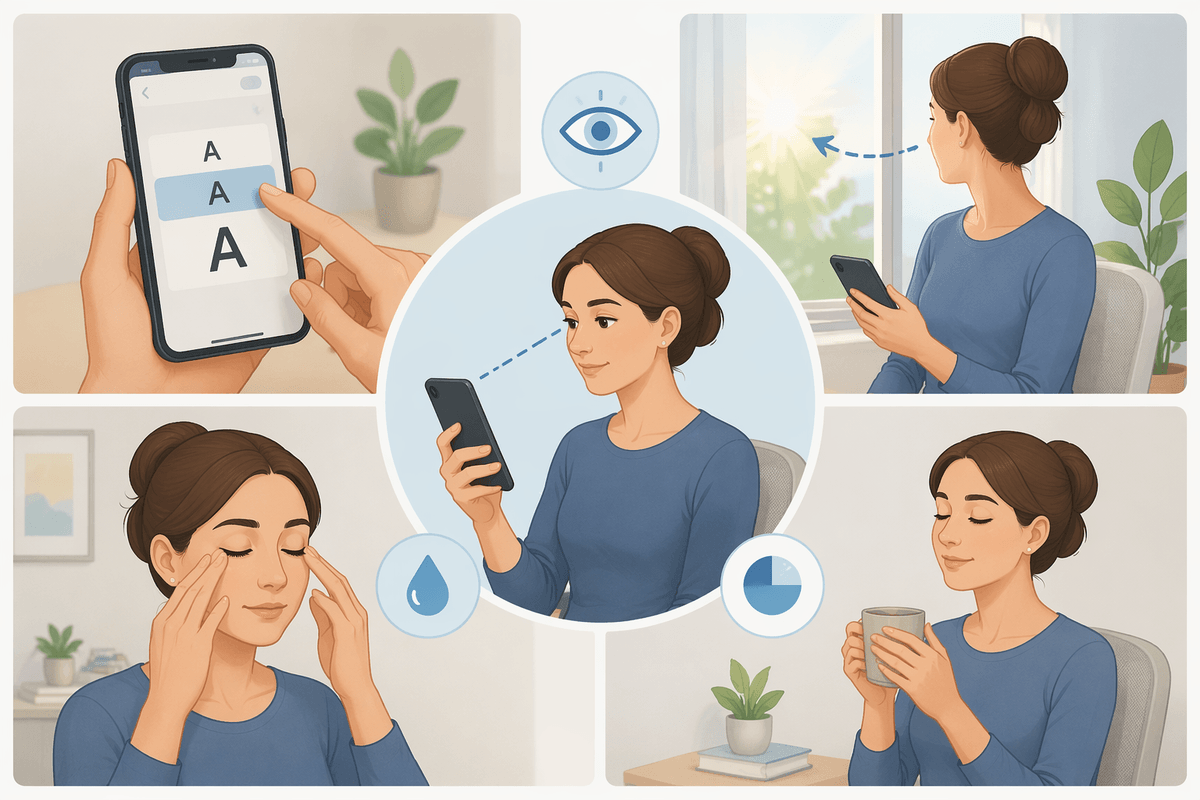
It often starts with a reasonable decision: you skip the exam because nothing feels urgent, then months later you can’t tell whether the problem is your eyes or your habits. One week your vision seems fine, the next you’re squinting at captions, then it clears after a good night’s sleep. That inconsistency is what makes the delay feel “safe” right up until it doesn’t.
Part of the confusion is how well you compensate without noticing. You nudge fonts larger, turn your head to avoid glare, or take breaks that temporarily quiet the dryness—so the change doesn’t look like a change. Small prescription drift can also show up as fatigue or headaches instead of obvious blur, especially after long screen stretches.
Then the first truly clear signal arrives in a specific moment: night driving feels harsher, a dim restaurant menu is harder, or one eye seems slower to lock in. It can feel sudden, even when it’s been building quietly in the background.
Practical ways clinicians decide your next visit
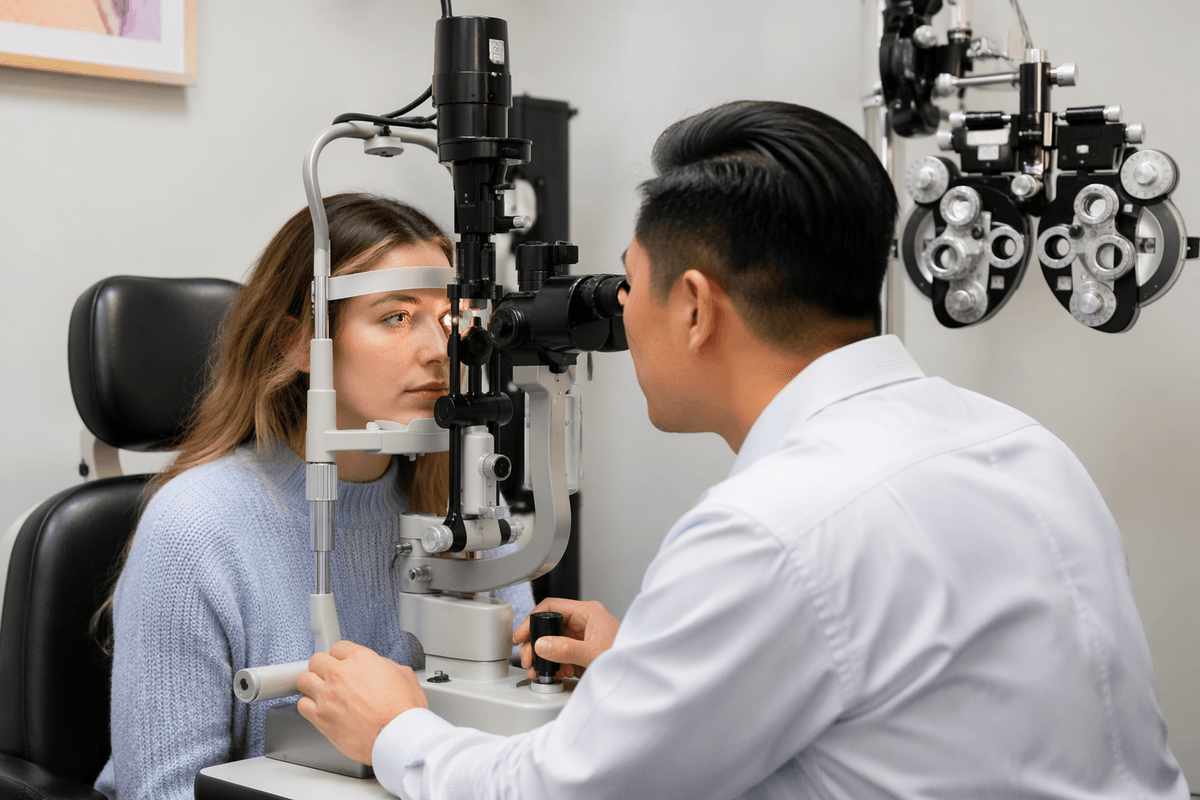
Sometimes the most telling moment is in the exam chair, when you realize the chart looks “fine,” but your eyes feel worked—like they’ve been holding focus by effort. Clinicians tend to listen for that mismatch: functioning well enough day to day, yet needing more squinting, brighter light, or extra recovery time after glare.
From there, the next-visit timing usually comes from a few practical anchors. If your prescription has been stable, your eye surface looks calm, and the health checks (pressure, optic nerve appearance, retina view) don’t raise questions, the interval often stretches. If your clarity fluctuates with screens, dryness signs show up, or your focus system seems less flexible up close, the window may shorten—not because something is “wrong,” but because the pattern is easier to track while it’s still inconsistent.
Risk factors—family history, diabetes/blood pressure, higher prescriptions, contact lens wear—often tip the decision toward earlier follow-up. It’s less a rule than a shared bet on how much your eyes can change before you’d notice.