The summer road-trip body mismatch you don’t expect
About an hour into a summer drive, it can feel like your body is doing two different jobs. Your eyes are busy tracking lanes and brake lights, but everything below your ribs is getting quieter—legs planted, hips folded, shoulders inching up toward your ears. You might reach for the A/C and assume you’re “comfortable,” even as your mouth gets a little dry and your lower back starts to feel oddly heavy.
That mismatch is part of why road-trip fatigue sneaks in. Long sitting can dull circulation and stiffen the hip flexors, which makes small movements feel harder when you finally stop. Meanwhile, cool air blowing on your face can hide how much fluid you’re losing in the heat, so thirst shows up late. Add the mental load of navigation, kids, pets, or traffic, and the first sign isn’t always sleepiness—it’s irritation, foggier focus, or a sudden urge to snack.
It may help to treat those early, quiet signals as “setup” rather than random discomfort. The day often goes better when you notice the pattern before it turns into the mid-afternoon slump.
Heat and dehydration build before you feel thirsty
You notice it first as a small thing: your lips feel tacky, or you keep swallowing like there’s dust in your throat. The cabin is cool, so it’s easy to assume you’re fine—until you step out at a stop and the heat hits, and you realize you’ve been running a little “dry” for a while.
In summer, dehydration can stack up before thirst feels obvious. Warm air outside, sun through the windows, and steady A/C inside can all pull fluid out of you without much drama. When you’re focused on driving, you also tend to breathe a bit more through your mouth, and you may talk more than usual to stay alert. None of it screams “dehydration,” but together it can show up as a mild headache, heavier eyelids, or that flat, impatient feeling that makes everything—traffic, noise, questions—feel louder.
One complication is the common mix-up between thirst and “I need something.” If the first cue you notice is fatigue, it’s easy to reach for salty snacks or another coffee, and then feel even drier twenty minutes later.
Snacking for alertness can backfire mid-drive
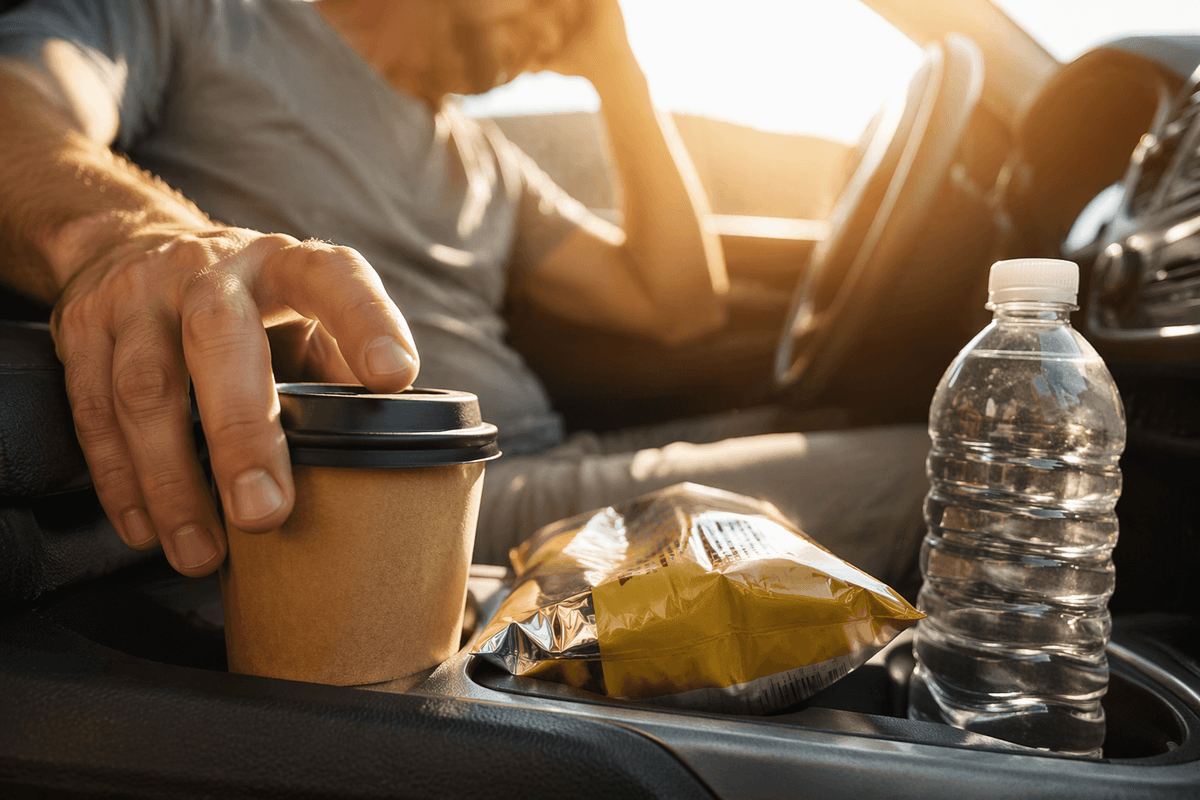
Somewhere around the second gas stop, you tear open a bag without thinking—something crunchy, salty, easy. For a few minutes it works. Your brain gets a little jolt, your hands feel busy, and the drive seems sharper. Then the “help” turns slippery: your mouth gets drier, your stomach feels oddly hollow and heavy at the same time, and you’re hunting for the next bite before you’ve even finished the first.
That swing often isn’t about willpower—it’s about how snack foods are built. A lot of road staples are mostly refined carbs plus salt, which can spike energy quickly and then drop it, especially if you’ve been sipping coffee or running behind on water. Chewing can also mask early fatigue; it keeps you stimulated while the underlying drain (heat, dehydration, long sitting) keeps growing.
When the pattern continues, it can start to feel like constant “low-grade hunger,” even if what you really need is a steadier mix—something with protein or fiber—and a little fluid to match the salt.
Stiff hips, tight shoulders, and numb legs
When you finally slide out of the seat, your first few steps can feel surprisingly clumsy—hips stiff, one leg a little “asleep,” shoulders locked like you’ve been bracing for impact. A lot of people chalk it up to getting older or having a bad back, but it’s often just the quiet math of hours in one position.
With your hips folded, the front of the hip stays shortened and your glutes don’t do much. Circulation can slow in the legs, and the edge of the seat can press on nerves and blood vessels in ways you don’t notice until you stand. Up top, hands fixed on the wheel and eyes forward can pull your shoulders into a small shrug. It doesn’t feel dramatic in the moment, but by hour three it can turn into neck tension, tingling fingers, or a dull ache between the shoulder blades.
One day you’re fine; the next day the same drive makes your legs numb. Heat, dehydration, and even a salty snack can make that “heavy body” feeling show up sooner.
Bathroom math and the hydration trade-off dilemma
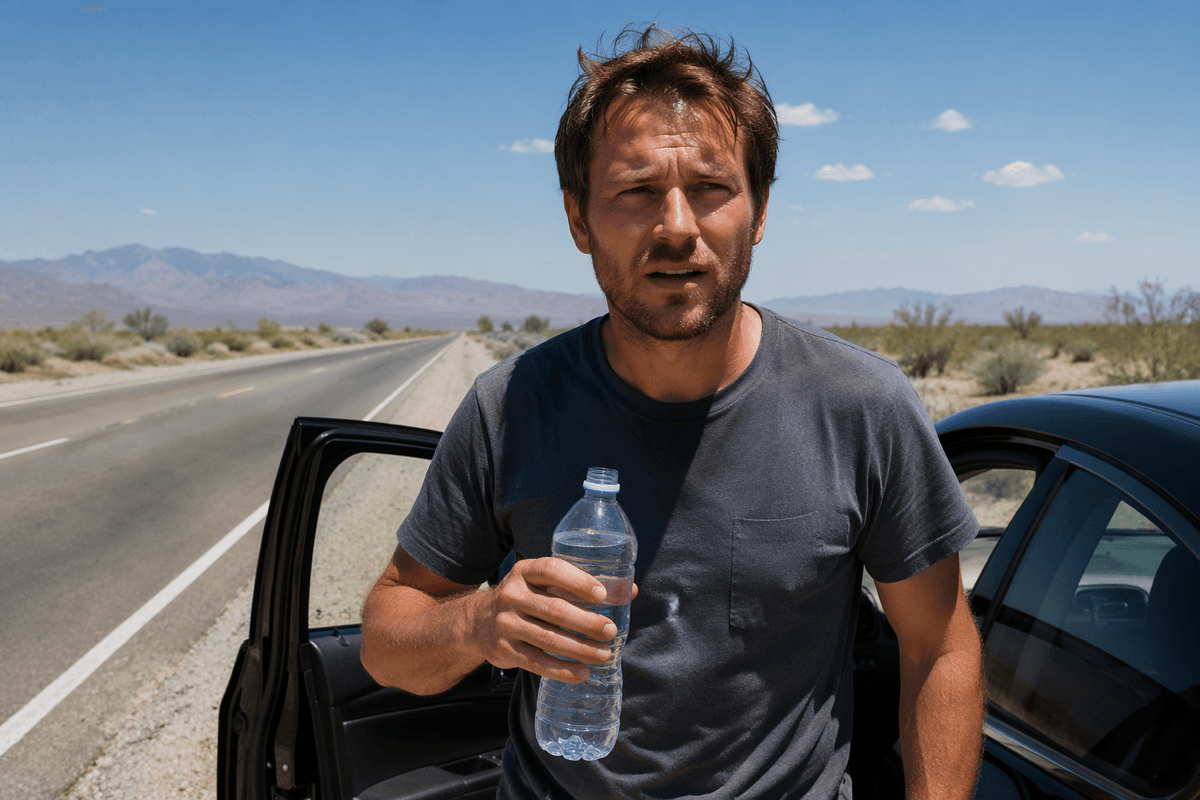
Halfway through a bottle of water, you catch yourself doing the calculation: If I drink now, I’ll need a bathroom stop before the next stretch. So you take smaller sips, then forget altogether—until your tongue feels thick and your patience gets thin in the same ten-minute window.
This is the road-trip dilemma: staying hydrated can feel like it costs time, but under-drinking often costs comfort and focus. In a cool cabin, your thirst signal can lag, especially if you’ve had coffee or salty snacks. By the time you feel “really thirsty,” you may already be chasing it with big gulps, which can hit your bladder fast and still leave you feeling strangely dry.
It can help to notice which part is driving the decision—schedule anxiety or body cues—because the “right” amount isn’t consistent. Heat, stops, and stress can shift the math every hour.
Food stops: choosing without turning it into diet rules
At the counter, it’s easy to turn a simple choice into a quiet argument with yourself: I should be “good”, I deserve a treat, we’re behind schedule. Meanwhile, your body is usually asking a more boring question—are you trying to fix dryness, low fuel, or that wired-but-tired feeling from hours of sitting and A/C?
Food-stop decisions tend to go sideways when you’re already a little depleted. Salty, fast carbs can feel perfect in the first ten minutes, then leave you thirstier and more foggy because they don’t stay in your system evenly. A very heavy meal can also pull attention inward—warm belly, slower alertness—right when you need steady focus back behind the wheel.
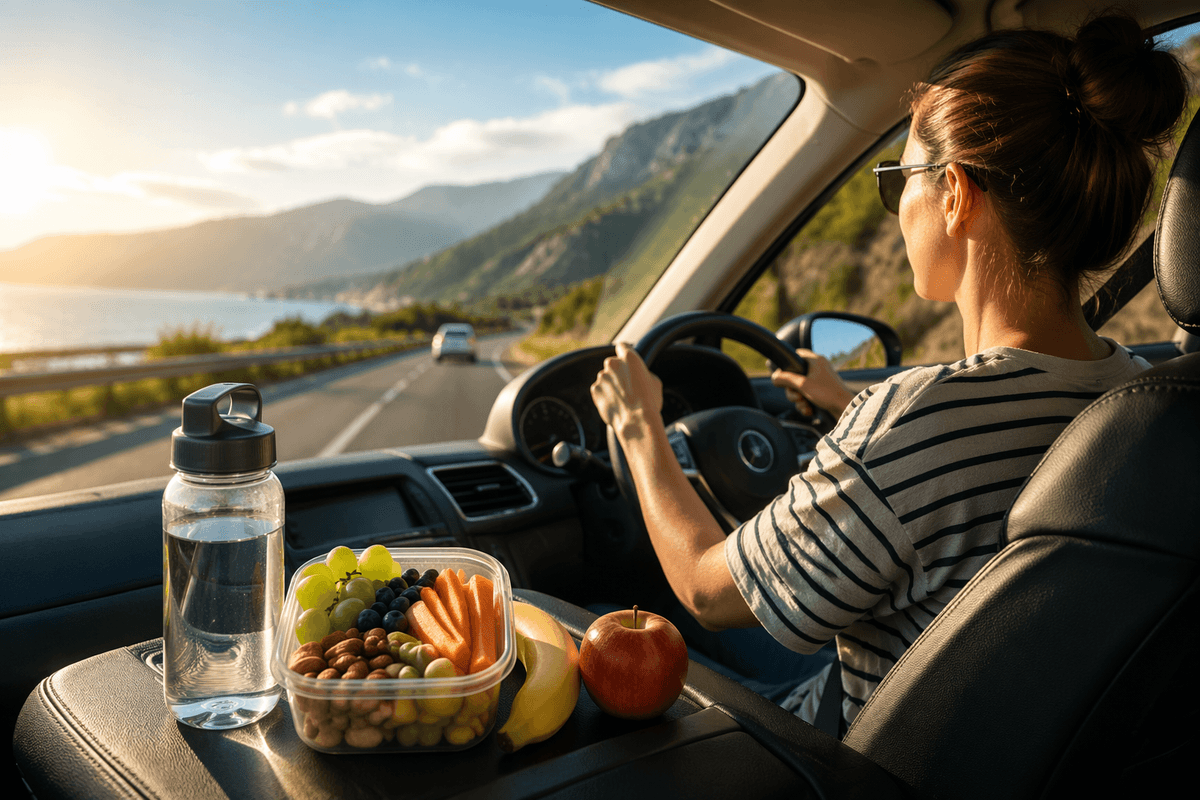
Instead of rules, some people do better with a quick “mix check”: something with protein (or dairy), something with fiber (fruit, beans, whole grains), and a drink to match whatever salt you grabbed. It’s not always available, and it won’t feel identical every stop, but it often prevents the next hour from turning into snack-chasing.
Rest, light, and focus as safety signals
It often shows up as a tiny mistake first: you reread the same highway sign twice, you miss the turn-in to a rest area, or your eyes keep “wanting” to settle on the bright phone screen even though you’re not that tired. The cabin can feel perfectly comfortable, but your attention starts to feel narrow—like you’re driving inside a tunnel.
That’s a useful signal, not a moral failure. When you’ve been sitting still, slightly under-hydrated, and running on quick snacks, your brain has to work harder to stay sharp. Glare off the windshield, steady road noise, and A/C drying your eyes can all add up to a kind of low-grade overload. You may blink less, squint more, and tense your jaw without noticing—then interpret the strain as “I just need caffeine.”
In practice, the safest cue is often inconsistency: drifting speed, late braking, or feeling unusually irritable. If that pattern keeps repeating, it usually means your body is asking for a reset, not another push.