Why the Hudson Valley hits peak fall magic
I noticed it the moment the train cleared the Bronx: the light got cleaner, the river widened, and suddenly the hills started doing the work for you. The Hudson Valley feels “peak fall” not because every tree is perfect, but because you get stacked scenery—water, ridgelines, and old towns—in the same sightline, so even a short walk can look like a postcard.
The geography also makes the color feel more dramatic than it sometimes is elsewhere: the Hudson acts like a long mirror, and the slopes on both sides read as big blocks of red and gold instead of scattered trees. That said, it’s not a cheat code—cloudy afternoons can flatten everything, and windy days can strip leaves faster than you’d expect, especially on exposed overlooks.
What really makes it work for an NYC weekend is the density of “high-payoff, low-effort” spots: you can string together one easy viewpoint, one riverside stroll, and one town meal without burning half the day in the car. The catch is popularity—some of the most cinematic stops are also the ones where parking and wait times quietly eat your foliage time.
When to go: peak windows and weather cues
The hard part isn’t “fall in the Hudson Valley,” it’s choosing a weekend when your expectations match what’s actually on the trees. In most years, I’d treat mid-October through the first week of November as the realistic window for a 1–2 night trip, with higher elevations and anything closer to the Catskills edge turning earlier than the river towns. If you’re deciding between Beacon/Cold Spring and something farther north like Rhinebeck, remember that going north can buy you slightly earlier color—but it also adds travel time, which matters when you’re squeezing this into limited PTO.
Instead of chasing a single peak date, watch the weather like a planner, not a poet: a couple of crisp nights (roughly 40s) tend to accelerate color, while a warm stretch can stall it. Heavy rain followed by wind is the combo that turns “we’ll go next weekend” into bare branches fast, especially on exposed ridgelines. If your dates are flexible, pick a weekend after a cooler dip but before a forecasted windy system, and you’ll usually get better-looking trees with less leaf litter on paths.
Crowds are the other forecast that matters. The “famous” weekends (especially around Indigenous Peoples’ Day) can make easy stops feel like an event ticket—parking fills, brunch lines stretch, and your best foliage light gets spent in traffic. If you can, go Friday into Saturday, or do a very early Sunday with a strict start time; sunrise-to-late-morning light is sharper on the river, while mid-afternoon can look oddly flat even when color is technically strong.
Best foliage viewpoints: hikes, overlooks, riverside drives
I hesitated at the trailhead sign in Beacon—“moderate” can mean very different things when you’re trying to protect your knees and still catch a view before lunch. If you want the classic river-and-ridge payoff without a full Breakneck-style effort, Mount Beacon’s approach is still a commitment (it’s steady uphill), but the view feels earned and expansive; go early and it works, go late and you’ll spend your best light waiting on narrow sections and negotiating crowded switchbacks.
For a more controlled, low-drama option, I like treating the river itself as the viewpoint. The waterfront paths in Cold Spring and Beacon give you long, open sightlines where color reads as big “blocks” across the water, and you can bail anytime if weather turns flat. This is also where the train-versus-drive decision shows up: if you’re on Metro-North, these walks are frictionless; if you’re driving, you’re paying in parking time that can quietly erase the “easy” part.
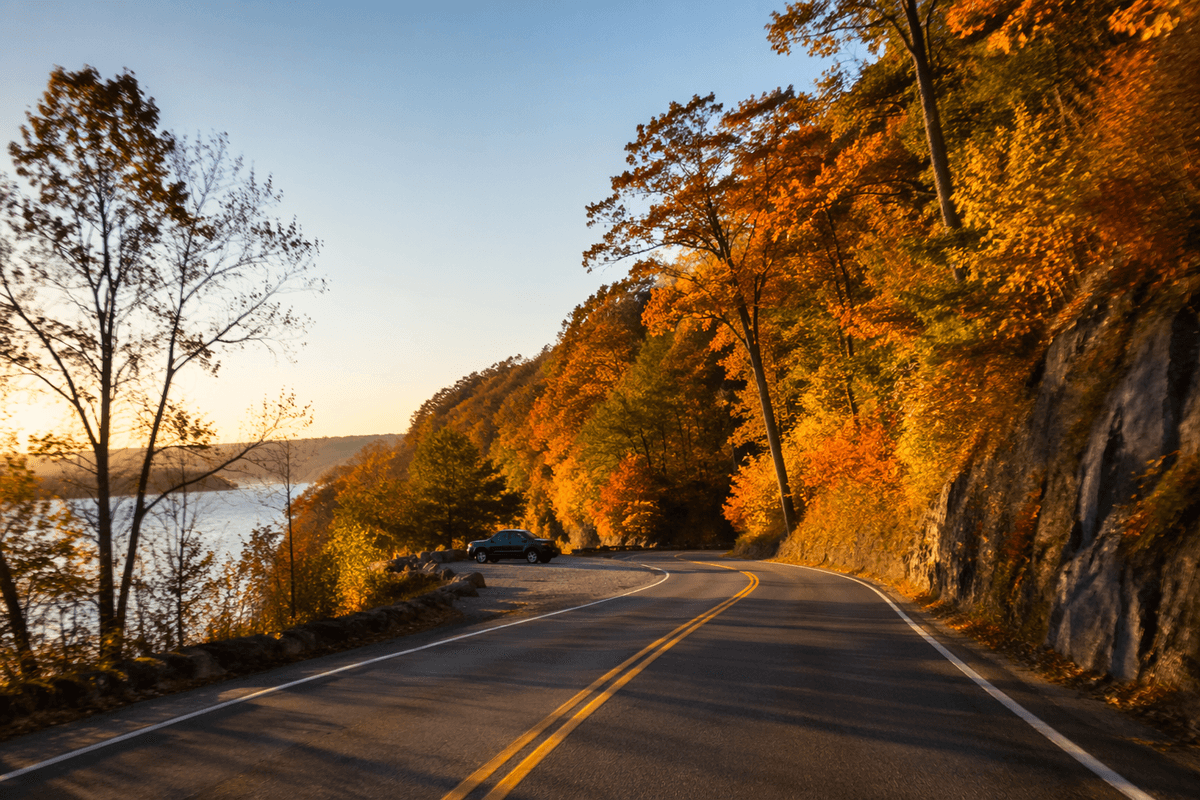
If you have a car and want foliage with minimal walking, a riverside drive can be the highest payoff per minute—until it isn’t. The views along 9D and stretches nearer the river are great when you’re moving, but scenic pull-offs are limited, and a sunny Saturday can turn “quick photo stop” into a slow crawl. My workaround is to drive earlier than you think you need, pick one deliberate overlook-style stop, then commit to a town on foot rather than trying to hop between five “perfect” viewpoints.
Best towns for leaf-peeping plus food and charm
I learned pretty quickly that picking a town here isn’t about “which one is cutest,” it’s about how much friction you’re willing to absorb to get that cuteness. Beacon works best when you’re arriving by Metro-North and want a flexible, walkable day: you can stitch together the waterfront, a quick brewery or coffee stop, and an early dinner without touching a car. The catch is that the “easy” plan gets less easy on peak Saturdays—restaurants book up and the sidewalk energy starts to feel like you accidentally scheduled a festival.
Cold Spring is the more immediately scenic, leaf-peeping-in-town option—river views, compact streets, and that fall-weekend vibe that reads great in photos. But it’s also the place where a short itinerary can get eaten by lines (brunch, ice cream, you name it) and by the limited room to spread out once crowds pile in. If you’re driving, it’s best as a morning stop with a strict cutoff time; if you’re on the train, it’s more forgiving because you can just keep walking when things feel too packed.
Rhinebeck feels like the calmer “home base” choice when you want a proper overnight with less stop-and-go stress—more lodging options, a bigger dining bench, and enough streets to wander without bottlenecking. You do pay for that comfort with extra travel time from the city, so it makes the most sense if you’re committing to 1–2 nights and you’d rather have one solid town + two high-payoff viewpoints than spend the whole weekend relocating.
How to do it: day trips, trains, parking, crowds
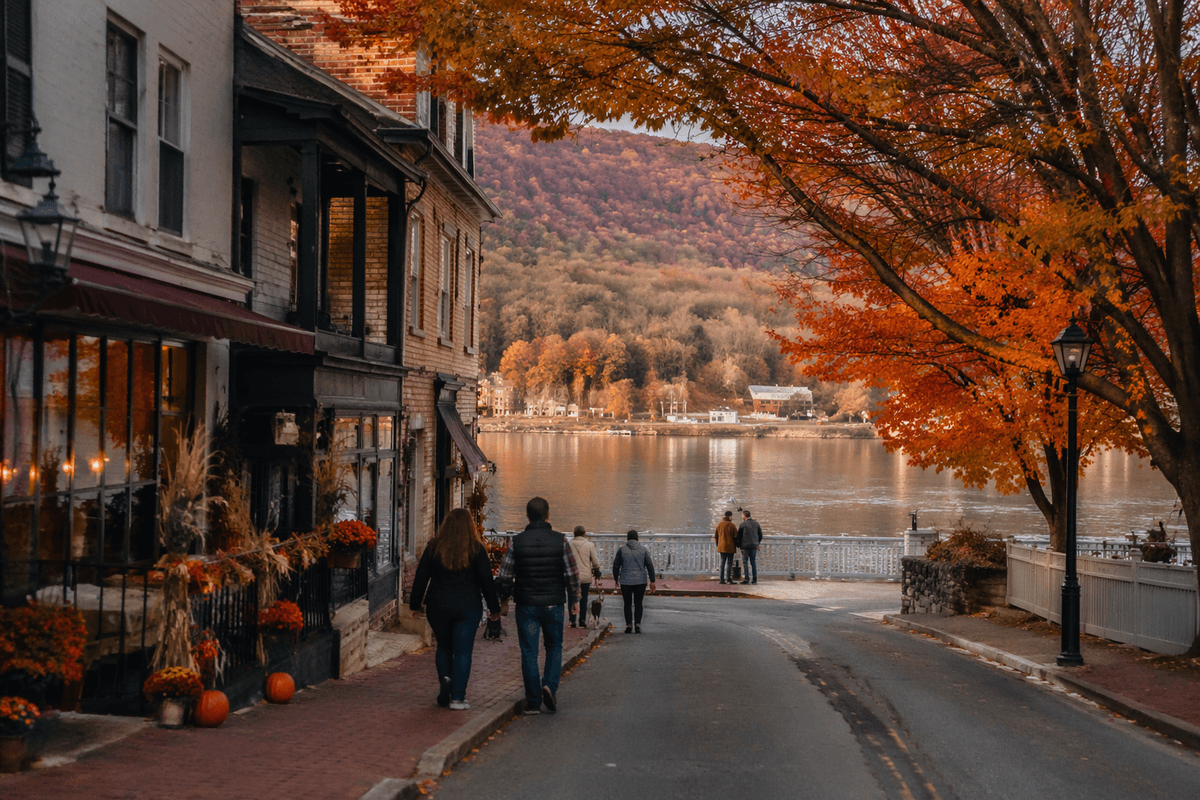
On my last run up, the real decision wasn’t “where’s the best color,” it was whether I wanted my schedule dictated by a train timetable or by a parking hunt. If you’re doing a true day trip, Metro-North to Beacon or Cold Spring keeps the day clean: you arrive, walk to the waterfront, and your foliage time is actually foliage time. The limitation is range—once you’re on foot, you’re mostly committing to one town plus a nearby viewpoint, and trying to “just pop over” to somewhere else quickly turns into rideshare uncertainty or bus math that doesn’t match fall-weekend traffic.
Driving buys you flexibility—especially if Rhinebeck (or anything farther north) is your home base—but it only pays off if you build your day around one or two anchors instead of constant hopping. On peak weekends, you can lose 30–60 minutes to parking in the wrong place, and that’s usually the hour when the river looks best. I’d rather park once (even if it’s a longer walk) than circle for the closest spot and arrive annoyed.
Crowds are also easier to “manage” than to avoid. A Friday afternoon arrival into Saturday morning itinerary is the sweet spot; Sunday can work if you start early and leave before mid-afternoon. If you’re stuck with a Saturday-only plan, pick one popular stop you truly care about, then balance it with a quieter riverside walk where you’re not competing for a single overlook railing.
Putting it together: pick your perfect fall weekend
On Friday afternoon, you’re basically choosing what you want to optimize: zero-hassle movement or maximum range. If your PTO is tight and you hate logistical drag, take Metro-North and commit to Beacon or Cold Spring—waterfront first for the best “instant foliage” payoff, then one short, deliberate viewpoint rather than chasing multiple stops you’ll only see through crowds. It’s the simplest way to avoid spending prime light in a parking loop.
If you’re staying 1–2 nights and want calmer pacing, drive and make Rhinebeck the base, but treat the car like a one-time tool: park once per stop, accept a longer walk, and stop pretending you’ll squeeze in “one more overlook” before dinner. The weekend clicks when you pick a lane—early start, fewer moves, and a plan that still feels good if color is slightly early or late.