Ringing ears as a signal, not a single condition
It’s often not the ringing itself that feels strange—it’s how it shows up. One night it’s a thin whistle after a concert, another time it’s a faint hiss in one ear while you’re lying in bed, and by morning it may be gone. That inconsistency can make it tempting to label it as one “thing,” when it may be your hearing system reacting to whatever changed around it.
Ringing can behave more like a signal than a single condition: the brain noticing a shift in input and turning up its own “internal volume” to fill in the gap. That shift can come from noise fatigue after headphones, a clogged or pressured feeling from congestion or wax, or even jaw and neck tension that subtly changes how the area around the ear feels. Because these triggers can stack—loud sound plus poor sleep plus stress—the ringing may become easier to notice, even when the environment is quiet.
Small details tend to matter: whether it’s one ear or both, whether it’s steady or pulsing, and whether it appears right after sound exposure or hours later. Those patterns don’t always point to a single cause, but they can hint at whether you’re dealing with a temporary “input change” versus something that keeps getting re-triggered by daily habits.
Sound overload and the delayed ringing effect
The weird part is how quiet the room can be when you finally notice it. You get home from a loud restaurant or take off your headphones, everything seems fine, and then—later, when you’re brushing your teeth or trying to fall asleep—a thin tone is suddenly there. It can feel like it came out of nowhere, even though the “loud moment” already passed.
Sound overload doesn’t always announce itself immediately because your ears and brain can stay in a kind of after-work mode. When hair cells in the inner ear have been pushed hard, the system may deliver a slightly dulled or “flattened” signal for a while. In that gap, the brain may turn up sensitivity to find detail again, and the extra gain can make a faint internal noise easier to detect. The delay is part of why people underestimate everyday volume—especially with earbuds, where the sound is close, steady, and easy to keep nudging higher without noticing.
There’s also an effort factor: once you start listening for it, silence has less cover. A brief ring that might have blended into background noise can feel sharper at night, and that can make the pattern seem more random than it is.
Everyday listening habits that quietly raise risk
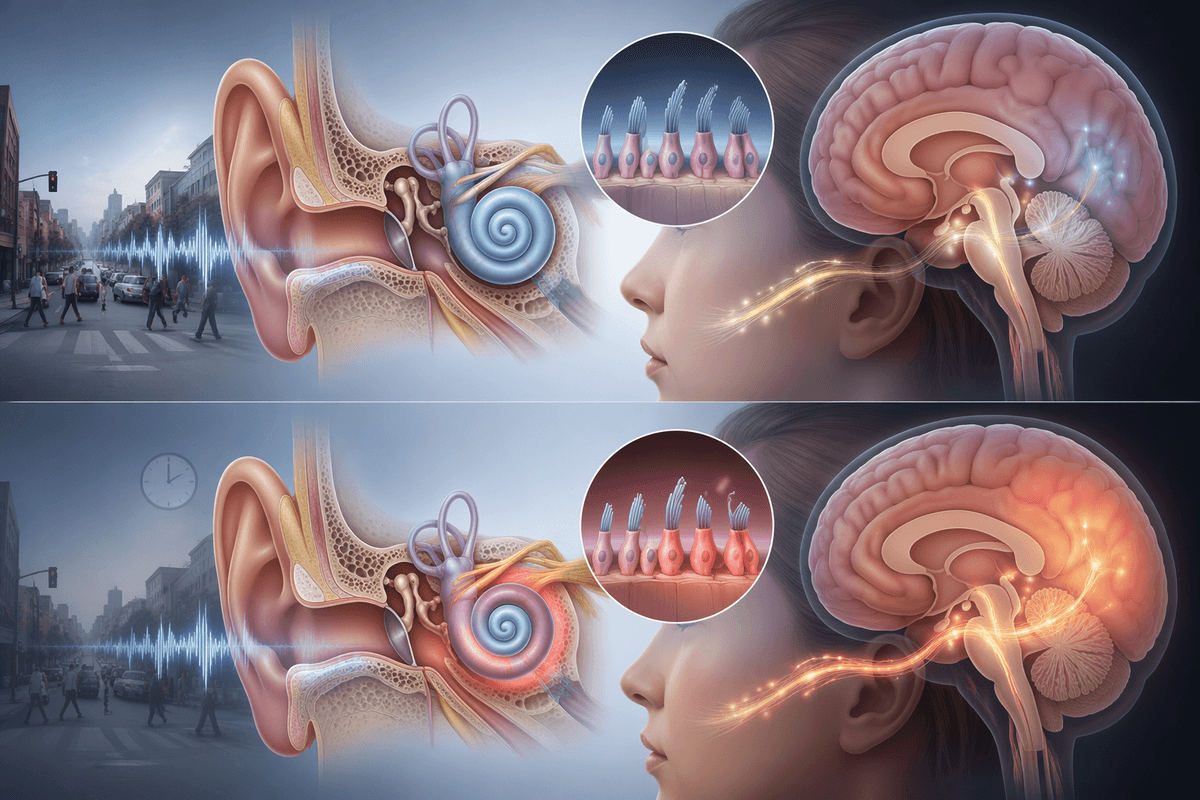
You don’t always notice the volume in the moment—sometimes you notice the aftermath. It’s the way you pull one earbud out and keep the other in, or you turn a podcast up a few clicks to cover the AC, and it feels harmless because you’re not “blasting” music. Then later, in a quieter room, there’s that faint tone again, almost like your ears are still trying to come down from the day.
Everyday listening habits can nudge the hearing system into a constant low-level workout: long stretches of earbuds, background TV that stays on for hours, commuting noise you talk over, or repeated short bursts of loudness (coffee grinder, blender, subway screech). The steady sound can feel normal, even while it leaves the inner ear a little fatigued, and that can make your brain more likely to “turn up the gain” afterward—especially when the environment suddenly gets quiet.
It also isn’t always symmetrical. Holding the phone to the same ear, driving with one window cracked, or standing near the same speaker at the gym can create a pattern where one side seems to ring more often. That doesn’t automatically mean something is “wrong” with that ear—it may just be the one getting more input, more often, in ways that are easy to overlook.
Stress, fatigue, and the brain’s volume knob
Sometimes the ringing is loudest when nothing else is. You finally sit down, the house gets quiet, and that thin tone you didn’t notice all day suddenly has room to stand out. It can feel like a new problem, even though it may be more about the brain shifting into “scan for danger” mode when you’re stressed or worn down.
Stress and fatigue don’t have to create the sound to make it harder to ignore. When you’re underslept, tense, or running on adrenaline, the nervous system can stay dialed up—breathing gets a little shallower, shoulders creep upward, and the jaw may hold a light clench without you realizing. That background tension can change blood flow, muscle pressure around the ear, and how strongly the brain prioritizes tiny internal signals.
A day with the same headphones may end differently depending on sleep, workload, and how tightly you’ve been holding yourself together. In some situations, the ringing isn’t “worse,” you’re just less buffered from it.
Jaw, neck, and sinus pressure feeding ear noise
You notice it most when you yawn or swallow: the ringing shifts pitch for a second, or one ear feels “full” and slightly off. It’s easy to blame the ear itself, but the sensation often sits in a shared neighborhood—jaw hinge, throat, upper neck—where small changes in pressure and muscle tension can make the ear’s normal background signals feel louder.
The jaw joint and chewing muscles live close to the ear canal, and they share busy nerve pathways with the middle ear area. When you’ve been clenching through traffic, grinding at night, or holding your head forward over a laptop, the muscles around the jaw and neck can stay subtly tight. That tension can change how the ear perceives vibration and pressure, so a faint internal tone that would usually fade into the background becomes easier to pick out.
Sinus and nasal congestion can add another layer. Swelling around the Eustachian tube can make pressure equalization inconsistent—one ear pops, the other doesn’t—and the “muffled” input can nudge the brain to turn up sensitivity. The ringing may show up hours after the jaw soreness or stuffy feeling, so it can seem unrelated even when the pattern keeps repeating.
The ‘helpful’ fix that backfires unexpectedly
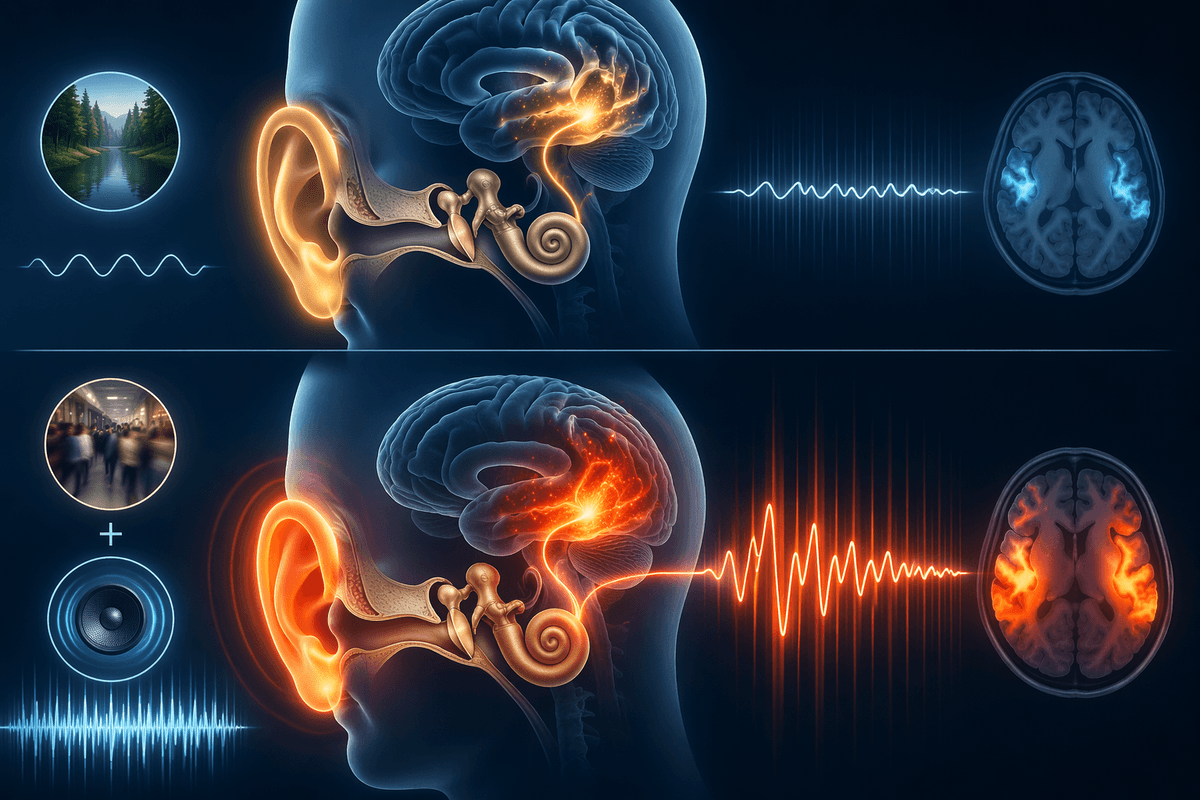
The impulse is usually quick: you notice the tone, and you try to cover it. A fan goes on, a white-noise track starts, you slip an earbud in “just for a minute.” It often works—at least emotionally—because the ringing has something else to compete with. But sometimes the next quiet moment feels worse, like the sound came back sharper instead of fading.
That backfire can happen when the “relief” is also more input for a system that was already touchy. If your ears were a little noise-fatigued, adding steady sound can keep the brain’s gain from settling, especially if the masking sound is louder than it needs to be. Some people also end up listening harder—straining to check whether the ringing is still there—which can keep attention locked on it even while the room is technically noisier.
There’s a similar trap with the physical fixes. Digging at wax, forcefully popping the ears, or aggressively blowing your nose can change pressure fast and irritate the canal or middle-ear area. The goal is relief, but the sudden pressure shifts can leave the “fullness” feeling—and the ringing that tags along—more noticeable for a while.
When ringing crosses into a check-in territory
It’s often a small detail that changes the tone of your worry: the ringing doesn’t fade by morning, or it shows up in the middle of a normal day instead of only after loud sound. Sometimes it’s the unevenness—one ear doing it more than the other—or the way it seems louder than it “should” be for the amount of noise you had. That’s when the question shifts from “What did I do today?” to “Is something else going on?”
Patterns can matter here, even if they still don’t point to one clean cause. A steady, high tone that follows obvious sound overload often behaves differently than a pulsing, heartbeat-like whoosh that seems tied to exertion, stress, or pressure changes. Sudden new ringing on one side, a noticeable change in hearing, or ringing paired with dizziness or significant ear pain can sit in a different category than the familiar, intermittent hiss that comes and goes with sleep debt and headphones.
Part of the difficulty is that attention and uncertainty feed each other. The more you “test” your hearing in silence, the more the brain keeps scanning the same channel for updates, and the sound can feel bigger—even if the trigger was ordinary. A check-in is less about proving something is wrong and more about not carrying a persistent or changing pattern alone, especially when it stops fitting your usual triggers.