Intro
The first real decision hit before we even picked a hotel: do we build the trip around a tournament day (one shot at the full atmosphere) or a practice day (more roaming, more photos, less pressure)? With three friends splitting 3–4 nights on a moderate budget, that choice controls everything else—where you stay, how early you move, and whether you can squeeze in a nearby tee time without turning the week into a series of sprints.
Masters Week looks deceptively simple on paper because Augusta National itself is the “main event,” but the logistics are where trips get expensive and tiring. Lodging prices climb fast the closer you get to the gates, traffic has a way of swallowing “short” drives, and tee times around Augusta don’t just sell out—they get pricier and less flexible. The goal here isn’t to do everything; it’s to make one Masters day feel unhurried, then pick the golf round and the commuting strategy that won’t leave you stuck in a car or paying peak rates out of frustration.
What follows is a day-by-day plan that’s intentionally opinionated: must-dos versus nice-to-haves, what to skip when time tightens, and the practical calls (practice vs tournament, where to base yourselves, when to chase a tee time) that keep the week fun instead of chaotic.
Mon–Tue | Must: practice | Opt: merch | Skip: driving

Monday morning we had that first “are we really doing this?” moment in the hotel parking lot: GPS said 18 minutes to Augusta National, but the line of cars already told a different story. For Mon–Tue, I’d anchor the trip on a practice round because it buys you flexibility when your group inevitably moves at three different speeds. You can post up at a spot you love, wander without feeling like you’re missing scoring swings, and still leave the grounds without the end-of-day crush feeling like a penalty. The constraint is arrival time—if you roll in late, you’ll still get in, but you’ll spend your best energy standing and recalibrating instead of seeing the course.
Merch is the optional add-on that becomes mandatory if you don’t plan it. The shop experience is smoother early; later it turns into a time sink that eats the “walk the course” part of the day. Our best rhythm was: one person commits to the line while the others grab coffee/food and scout a meeting point, then you swap if needed. Set a spend ceiling before you enter—prices aren’t outrageous for the quality, but the volume of “only here” items makes moderation harder than you expect.
The big skip on Mon–Tue is unnecessary driving. Pick one base (even if it’s 20–40 minutes out) and resist the urge to bounce between “cheaper” dinner, a different bar, and a far-off course preview. During Masters Week, those little repositioning drives expand, parking gets annoying, and you’ll feel it the next morning when you’re trying to be sharp and early again.
Wed | Must: Par-3 | Opt: practice | Skip: late night
Wednesday was the first day we felt the schedule tighten—because the Par-3 isn’t just “another practice day,” it’s a fixed-time draw with a real crowd pulse. If you can get Par-3 tickets, make that the anchor and treat everything else as a bonus, not a guarantee. The course is smaller, sightlines are better, and it’s the easiest place all week to actually see shots without sprinting hill-to-hill. The catch is density: you’ll get bottlenecked in a way that doesn’t feel as bad on the main course, and once you’ve committed to following a group, it’s harder to peel off and rendezvous with friends without losing 30 minutes to re-orienting.
We tried pairing Par-3 with “a quick loop” on the main course afterward, and it worked—barely. The best version is to pick one specific target (Amen Corner photo, 16 grandstand, a single tee box you care about) rather than pretending you’ll cover everything. Legs and patience matter more on Wednesday than you’d think, because you’re walking the same hills but with more stop-and-go. Concessions are efficient, but lines spike in predictable waves; eat earlier than your stomach asks.
The thing to skip is the late night. Even if you’re tempted to chase a dinner reservation or hang out in Augusta, Wednesday is when sleep pays off—Thursday crowds and timing are less forgiving, and a slow morning becomes an expensive mistake when you’re burning rideshares, missing parking windows, or arriving already irritated.
Thu–Fri | Must: amen corner | Opt: concessions | Skip: phone time
Thursday morning we had our first “tournament-day reality check” at the gate: we were moving, but not quickly, and every minute we spent fiddling with pockets and badges was a minute we weren’t walking to where we actually cared to be. For Thu–Fri, I’d make Amen Corner the non-negotiable and treat it like a timed appointment, not a casual stroll. Get there early enough to claim a clean sightline, because once the density builds, you can still reach the area—but you’ll feel like you’re watching golf through a moving crowd. If your group splits, pick a single reunion landmark (not “near 12”) or you’ll waste prime hours playing human GPS.
What worked best for us was committing to one full “Amen Corner block” instead of trying to bounce between tees and greens every few holes. The course rewards patience here: you start noticing wind shifts, how long it takes roars to travel, how different the same shot looks when you aren’t sprinting. The constraint is comfort—standing in one zone is easier mentally but harder on feet and lower back, so decide in advance who’s willing to hold a spot versus who needs to keep moving.
Concessions are optional, but only if you time them like a pit stop. Lines spike right after big groups pass and around predictable meal windows; going 30–45 minutes “early” beats going when you’re hungry and short-tempered. And skip phone time as a default. A quick photo is fine, but scrolling or trying to text play-by-play is how you lose the day—service can be inconsistent, and you’ll miss the one swing you’ll talk about all year.
Sat–Sun | Must: final holes | Opt: golf round | Skip: crowds
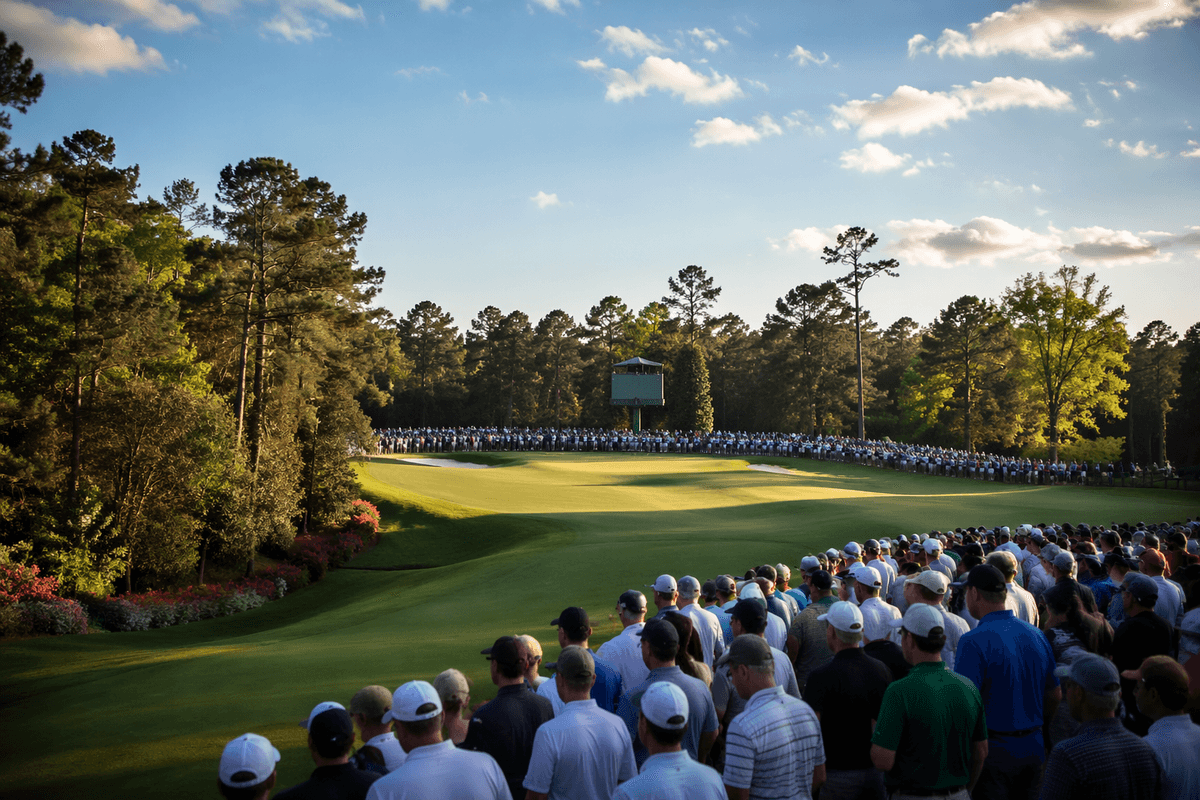
Saturday morning we made the same mistake a lot of first-timers do: we started “following a player” instead of building the day around where drama actually concentrates. If your one Masters day lands on the weekend, treat the finish like your anchor—15 through 18 is where you can feel the tournament tighten in real time, and it’s also where being even 20 minutes late changes what you can see. The workable version is to get to that corridor earlier than feels necessary, accept that you’ll stand more than you’ll roam, and pick a specific viewing goal (one green, one fairway crossing, one scoreboard). When we tried to keep bouncing for “one more hole,” we spent too much of the best stretch in transit, staring at backs and hunting for gaps.
The optional add-on is squeezing in your own round, but it’s only fun if you plan it like a separate trip day rather than a morning “warm-up.” Tee-time scarcity is real during Masters Week, and weekend slots near Augusta tend to be the most inflated and least flexible—especially if you need three spots together. If your group wants golf, Sunday afternoon can work if you’re already leaving town and you’re willing to play farther out; Saturday morning only works if you lock it in well ahead and accept you might arrive at the gates later than you’d like.
What to skip: chasing peak crowd moments just because they’re loud. The energy is the point, but there’s a difference between being near the roars and being trapped by them. We had a better day once we stopped trying to “be everywhere” and instead chose one dense stretch to commit to, then used any leftover time for calmer sightlines and food before the walk back out felt like a second event.
Close
On our last morning, the temptation was to squeeze in “one more thing”—one more drive past the gates, one more stop for food, one more loop around town. That’s where the week can quietly flip from memorable to messy, because Masters logistics punish casual add-ons: traffic is never truly “off,” and a late checkout or delayed departure can turn into hours you didn’t budget for.
If I had to boil it down to one decision cue: pick your one non-negotiable (practice freedom, Par-3 charm, or tournament-day electricity), then protect the time around it like it’s a tee time you can’t miss. Everything else—merch, concessions, even your own round—works when it’s planned in clean blocks and skipped without regret when the clock slips.