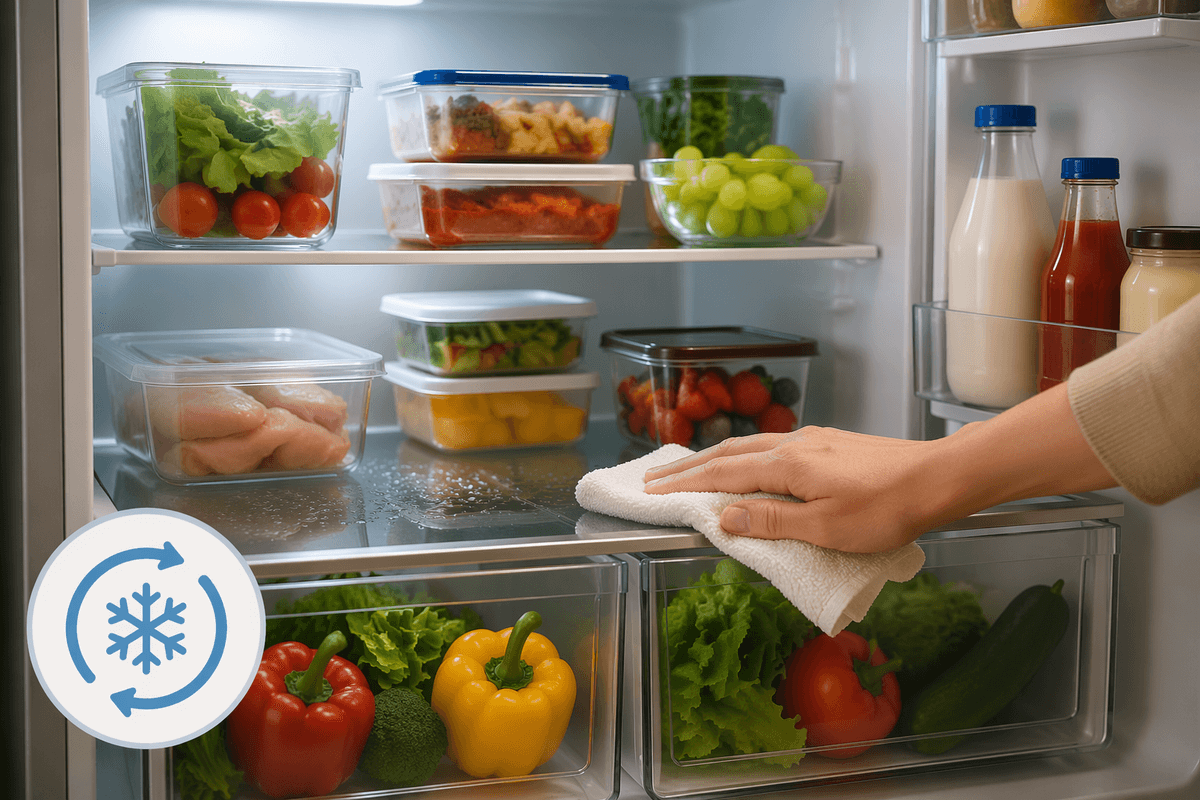
Cold doesn’t mean safe without clean habits
You open the fridge for milk and catch a faint “something’s off” smell, even though everything feels cold to the touch. It’s easy to assume the chill is doing all the work. But cold mostly slows things down—it doesn’t erase what got introduced earlier through hands, drips, or a container lid that didn’t quite seal.
A common slip is putting leftovers away while they’re still warm. The outside cools quickly, but the center can stay in that in-between range long enough for bacteria to hang on, and the steam it releases turns into moisture on shelves and walls. That damp film makes it easier for tiny residues to spread when a bag shifts or a jar gets moved, especially in a busy fridge that’s opened often.
Even “clean-looking” shelves can hide the problem: a little meat juice under a package, a salad container that leaked, a condiment ring that keeps getting rewetted. The cold buys time, but it can also preserve these small messes—so the fridge stays cold and still becomes a place where spoilage and cross-contact quietly stack up.
Refrigerator zones quietly change how food spoils
The part that can throw you is when one container stays fine all week, while the same meal in a different spot turns sour in two days. It doesn’t always mean the food was “bad” to start with. Inside a refrigerator, the cold isn’t evenly shared—some areas run a little warmer, some get blasted with dry air, and some collect moisture in a way you don’t notice until a smell shows up.
The door is the classic example: it warms up every time it swings open, so milk, eggs, and sauces there can seem to spoil “randomly” if your kitchen is busy. The back wall is usually colder and can partially freeze delicate produce or turn uncovered leftovers dry at the edges, which people sometimes mistake for the whole dish going off.
Lower shelves can stay colder, but they also end up catching drips and condensation from above. That means a tiny leak can quietly touch other packages, and the first sign isn’t always visible—sometimes it’s just faster funk, sliminess, or a damp shelf that keeps returning even after a quick wipe.
Overpacking feels tidy but drives messier outcomes
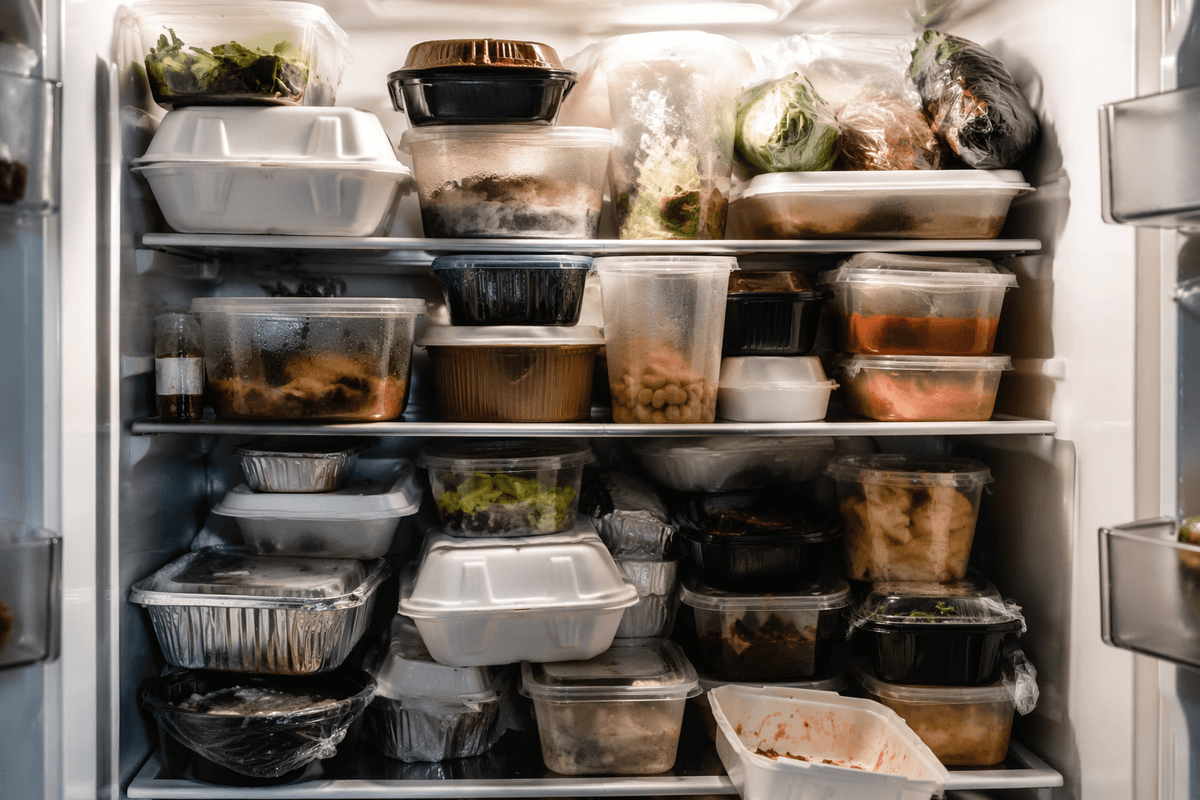
You slide the last takeout box onto the middle shelf and it clicks into place like a solved puzzle—until the next day, when the fridge smells “busy” and a container feels oddly soft on the sides. A packed fridge can look organized while it’s quietly working harder. When items are pressed shoulder-to-shoulder, cold air can’t move well around them, so some corners stay a little warmer and certain foods spoil sooner even though the thermostat hasn’t changed.
That tight spacing also makes moisture behave differently. Condensation that might have dried on an open shelf can linger between stacked packages, and one small leak has more surfaces to touch. The mess often shows up indirectly: lids get slick, labels turn damp, produce bags start sweating, and a faint odor seems to “come from nowhere.” It’s not always one dramatic spill—more often it’s repeated contact and trapped dampness that turns a tidy-looking fridge into a stickier, faster-spoiling one.
Spills become lingering odors through tiny repeated exposure
You wipe a shelf once, it looks fine, and then two days later the same spot feels faintly tacky again. That’s usually when people blame “something rotten,” but it’s often smaller than that: a thin smear of sauce, a drip from a thawing package, or condensation that re-wets an old ring under a jar.
In the cold, those residues don’t dry out the way they do on a counter. They sit in a damp film and keep getting disturbed—containers sliding, bags brushing past, a drawer closing with a soft bump. Each tiny contact spreads a little more residue to new surfaces, so the odor seems to float around the whole fridge instead of pointing to one obvious culprit.
Some weeks you’ll never notice it, and other weeks a single leaky container can “perfume” the plastic walls and gaskets. By the time the smell is clear, the spill has usually had multiple chances to be reactivated, not just one.
Container choices shape moisture, mold, and freshness
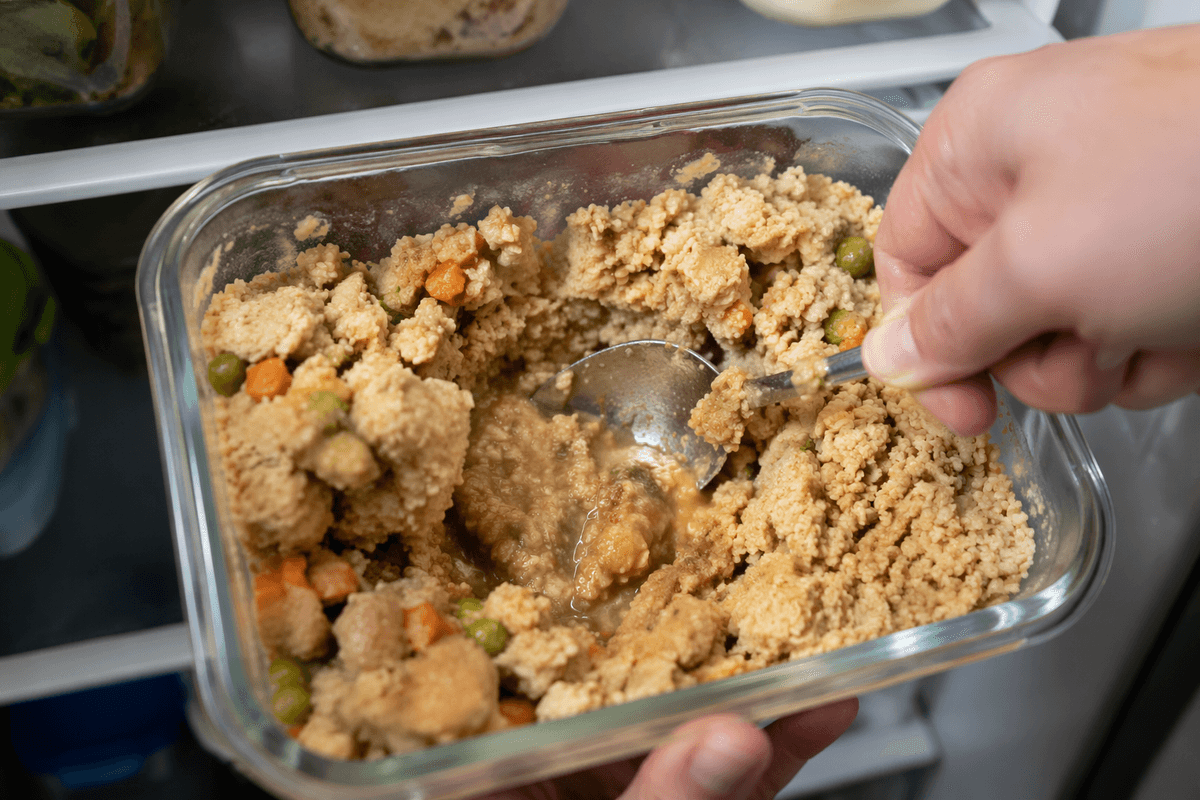
You pop the lid on a leftovers container and notice the underside is beaded with water, even though the food itself looks normal. That trapped moisture is easy to shrug off as “just condensation,” but in the fridge it can keep re-wetting the surface of the food and the container walls. When that happens, softer foods break down faster, and anything starchy or saucy can start to smell sour sooner—not always because it spoiled overnight, but because it stayed damp.
Different containers steer that moisture in different directions. A flexible takeout box that warps slightly can leave tiny gaps, letting odors travel and letting the top layer of food dry while the corners stay wet. A tight, thick container can do the opposite—holding humidity so well that small bits stuck in the lid groove stay moist, which is where moldy or “fridge-y” smells can take hold first.
The same meal can feel fine until you stir it and the wet, colder layer underneath comes up. It may seem like freshness changed suddenly, when it’s really the container shaping where moisture collects and how long it lingers.
Shelf placement reduces cross-contamination without extra effort
Small signs are often the easiest to overlook. A container of cut fruit comes off the shelf, and there's a faint sticky patch underneath or along the shelf edge. Nothing appears to have spilled, so it hardly seems worth thinking about. Inside a refrigerator, though, even minor leaks have a way of spreading because moisture naturally follows gravity, carrying residue into places where hands and ready-to-eat foods regularly come into contact.
Storage order plays a bigger role than many people expect. Raw meat or poultry placed above leftovers, prepared meals, or fresh produce increases the chance that moisture from packaging will work its way downward. Trays can collect condensation during storage, and even sealed packages may leave residue on their exterior. As containers are moved around, that residue transfers from one surface to another, gradually turning the refrigerator shelf into a shared contact point while the food itself still appears perfectly normal.
A simple change in layout helps keep that movement under control. Storing foods that are most likely to drip on the lowest shelves while keeping ready-to-eat items higher up limits the chance of cross-contact without adding extra work to the routine. The refrigerator won't stay spotless forever, but any mess is far more likely to remain contained instead of spreading from shelf to shelf.
A small maintenance rhythm prevents big cleanouts
You notice it when the door seal grabs slightly, or when a jar leaves a tacky half-moon on the glass shelf as you lift it. Nothing is “bad” enough to force a full cleanout, so it’s easy to close the door and deal with it later. But later tends to arrive all at once—usually when the fridge is full and dinner is already late.
A small rhythm works because the fridge is a re-wetting environment: condensation, temperature swings from frequent opening, and tiny drips keep old residues active. That means a quick wipe isn’t just cosmetic—it interrupts the cycle where one ring under a condiment becomes the next week’s odor, and where damp corners turn into the spots that feel slimy for “no reason.”
Some weeks are calm; other weeks leftovers stack fast and the warm-to-cold shuffle makes moisture and leaks more likely. If the fridge starts smelling “busy,” shelves feel sticky, or food seems to spoil unevenly, it’s often a signal that the small upkeep didn’t happen—not that the fridge suddenly became unreliable.