The real choice is your buffer time
At 06:05 on Monday, I caught myself hovering by the hotel door in Palanga, boarding pass open, trying to decide whether to risk one more coffee. It felt silly—Palanga Airport is small—but my flight time was tight and the “new screening” signs near departures were a reminder that small airports can still surprise you. The hesitation wasn’t about distance; it was about how much slack I was willing to buy.
That’s the real choice: buffer time versus reclaimed beach time. If security works like your last trip, you’ll sail through in minutes and an early arrival feels like punishment; if the upgraded lanes shift where queues form (or staff funnel everyone into one open checkpoint), you can lose 15–25 minutes without doing anything “wrong.” Compared to Vilnius, Palanga’s flow is simpler, but it’s also less flexible—fewer lanes means a single stalled bag check can ripple backward fast.
So I treat buffer as insurance, not a virtue. For a standard carry-on traveler, I’d rather arrive early enough to absorb one hiccup—an understaffed morning, a busier-than-usual weekend departure—than gamble on “normal.” If you’re the type who gets antsy sitting airside, set a hard last-call for leaving town and spend the extra cushion on a calm walk to the gate instead of a sprint.
What’s upgraded and why it matters
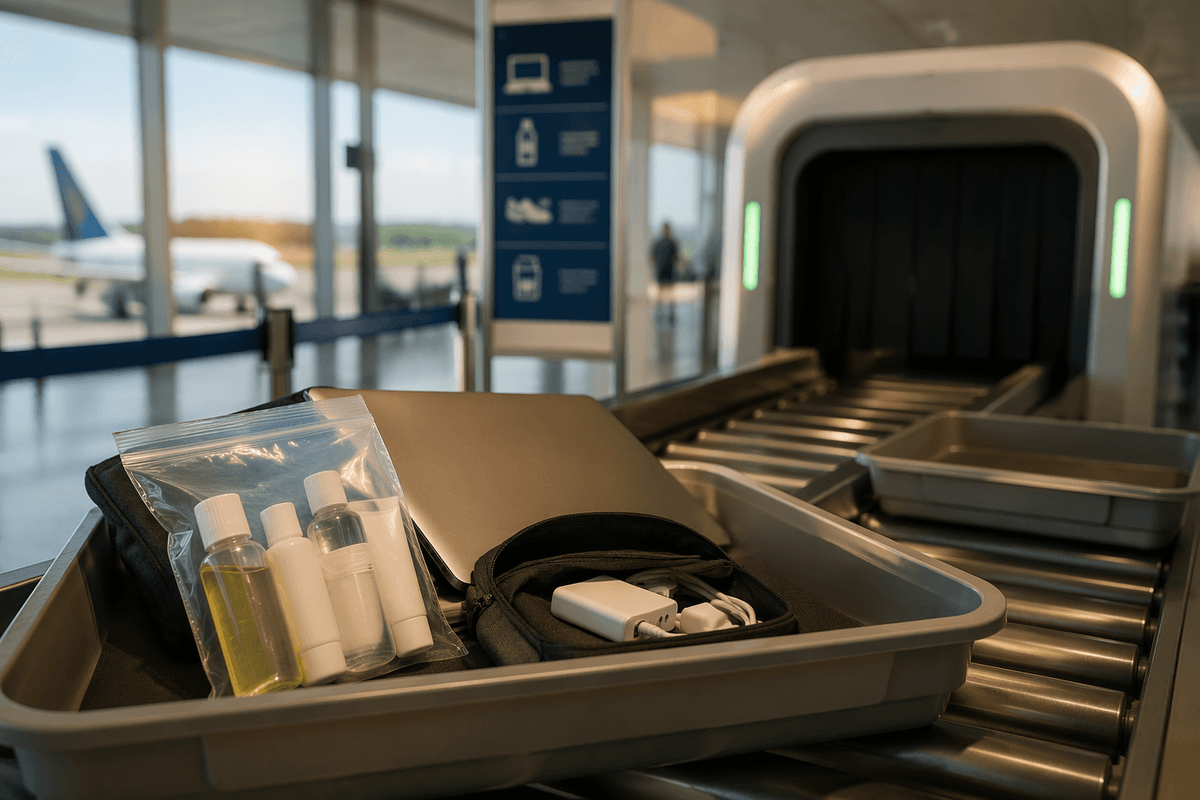
At the checkpoint, I paused at the plastic trays because the lane signage didn’t match my muscle memory: one board hinted “electronics stay,” while a nearby officer was waving a family into the slower side. I had a 90 ml sunscreen and a laptop, and the question wasn’t security itself—it was which process this morning was actually using. In a small airport, one misread cue can cost more time than it should.
Most “upgrades” boil down to two things: newer scanners and a redesigned lane that tries to keep people moving. If Palanga is running CT-style screening on a lane, you might be allowed to leave laptops and liquids in the bag—until the lane is switched, the machine is down, or staff route everyone through a conventional X-ray setup. That inconsistency is the trade-off: faster when it’s working as intended, more confusing when it isn’t, and confusion creates micro-stops that add up. Compared to a big hub, you don’t have parallel lanes to absorb hesitation.
My practical buffer rule here: assume the “old” rules (laptop out, liquids separate) and pack like you’ll be asked to prove it quickly. Put liquids in a single clear pouch at the top, keep chargers and dense toiletries away from your laptop, and don’t bury a power bank under souvenirs. It works best for carry-on travelers who hate secondary checks; if you’re checking a bag and traveling light, you can risk a slimmer cushion—just not on a Monday-morning departure.
How early to arrive by flight type
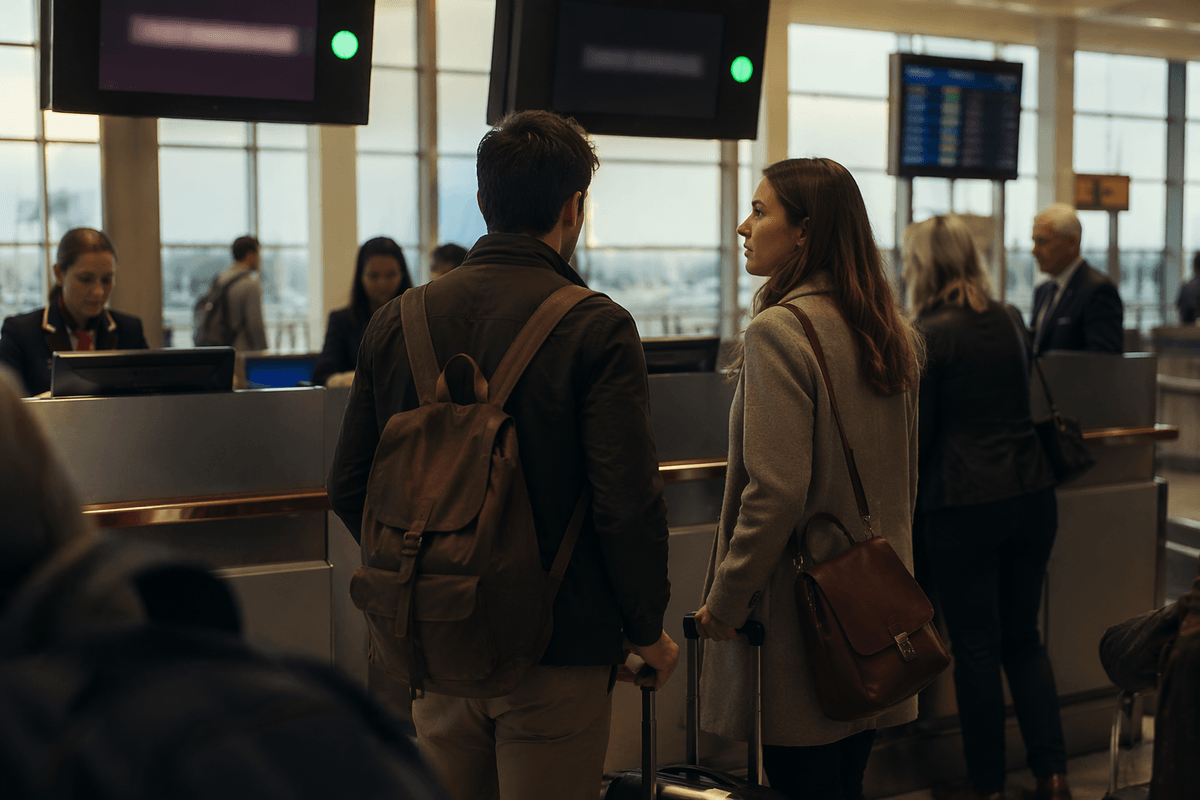
At 06:47, I watched a couple bounce between two check-in desks, each with a different “open” sign, while the departure screen quietly flipped to boarding. The queue wasn’t long, but it moved in pulses—five people glide through, then one bag stalls the lane and everyone compresses. That’s when “Palanga is small” stops being reassuring and starts being a timing constraint.
For a simple Schengen hop with only a carry-on, I’d aim to be at the terminal about 75–90 minutes before departure. That gives you room for the upgraded-lane ambiguity (laptop out vs. stay in) without donating your whole morning to fluorescent lighting. If you’re checking a bag, bump it to 90–120 minutes: Palanga’s limitation isn’t distance, it’s capacity—few desks, few agents, and check-in can become the bottleneck even when security looks empty.
If your flight is the first wave of the day, a Monday-after-the-coast squeeze, or you’re protecting a tight connection at a hub, treat 2 hours as the calmer choice. It’s not because the airport is chaotic; it’s because there aren’t many “plan B” lanes when something slows. If you hate waiting airside, spend the buffer on an unhurried check-in, then let the gate area be the part you arrive early for.
How to pack for smoother screening
I nearly triggered a bag-check over something dumb: a souvenir jar of amber-honey candies wedged next to my power bank, both pressed right against my laptop sleeve. The officer didn’t look annoyed, just careful, and the pause was long enough for the queue behind me to bunch up into that tense “are we late?” silence. It was a small moment, but it exposed the real constraint here—one extra look can stall an entire lane.
Pack as if you’ll be routed to the “old rules” lane even if the newer scanner is running. That means: liquids in one clear pouch you can grab in two seconds; laptop and tablet in a dedicated slot with nothing dense (chargers, cosmetics, snacks) stacked on top; pockets empty before you reach the trays. If you’re the type who packs like a puzzle, loosen the puzzle: leave a little air around electronics so the image reads clean.
For Palanga specifically, I’d add a quiet 10–15 minute cushion if your bag is messy, not if the terminal is busy—messiness is what creates unpredictable stops. Keep metal-heavy items (camera batteries, power banks, multi-port chargers) together in an easy-to-present pouch; scattering them across pockets is what gets you pulled aside. It works best for carry-on travelers; if you’ve checked a bag, don’t overthink it—just don’t make your personal item a mystery box.
My go-to plan for Palanga departures
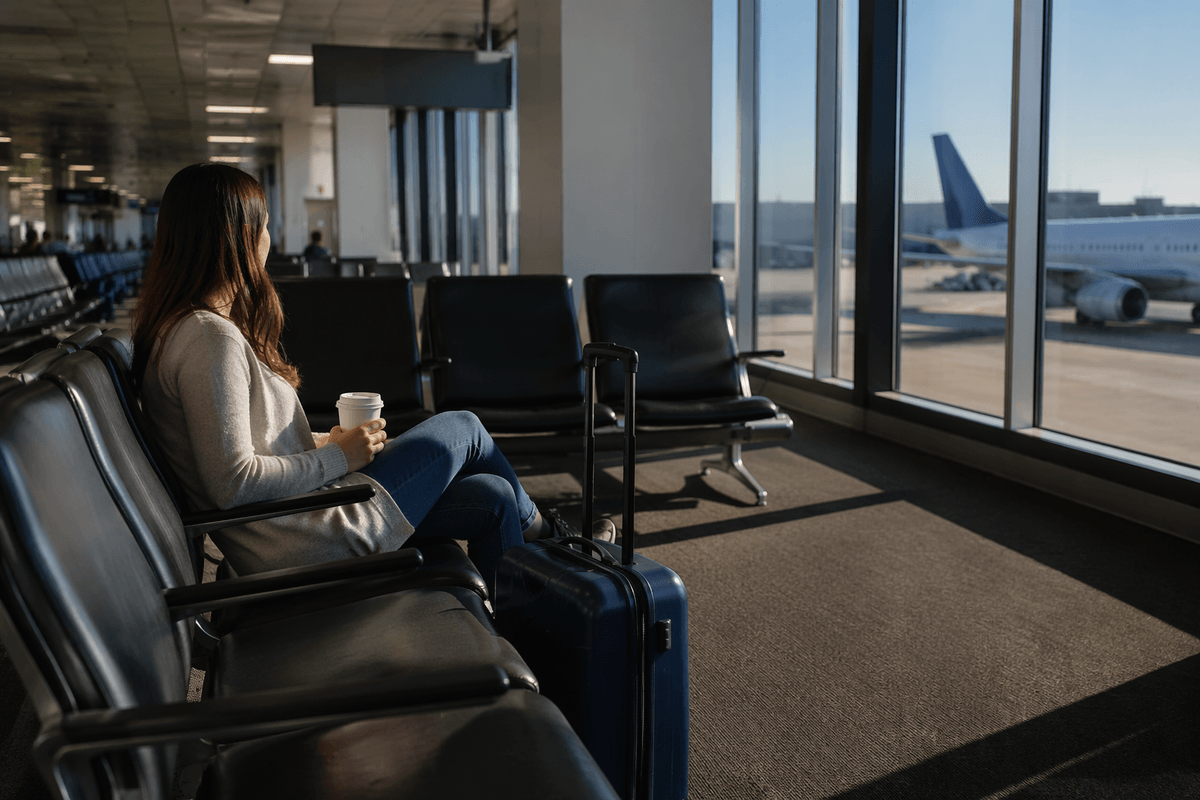
At 07:18, with sand still in my shoes, I stood outside Palanga’s doors watching two taxis arrive back-to-back and a small line form at the check-in monitors. My boarding group wasn’t even called yet, but the terminal had that “single-file” feel where one slow moment becomes everyone’s problem. I hesitated over whether to reorganize my bag outside or gamble on doing it at the trays.
My go-to plan is boring on purpose: arrive at the terminal 90 minutes before departure if I’m carry-on only, and 2 hours if I’m checking a bag or flying on a Monday-morning wave. That’s less about distance and more about Palanga’s limitation—there aren’t many parallel options if one desk closes or a lane gets switched back to conventional screening. If everything runs smoothly, you’ll “waste” time; if it doesn’t, you buy yourself a calm margin instead of a tight throat.
I pack for the stricter lane even when signs hint otherwise: liquids pouch on top, laptop accessible in one move, dense chargers and power banks together so they can be shown without excavating. It works best for mid-budget travelers who rely on routines; if you’re traveling ultralight and don’t mind uncertainty, you can shave 15 minutes, but only if you’re willing to accept the occasional secondary check. When I have extra buffer, I spend it at the gate—not on one more coffee in town.